
Learn About The Law
Get help with your legal needs
FindLaw’s Learn About the Law features thousands of informational articles to help you understand your options. And if you’re ready to hire an attorney, find one in your area who can help.
Current as of January 02, 2025 | Updated by Findlaw Staff
(a) Directions for using the tables.
(1) Using the method specified in § 1.958 of this chapter, determine the distances between the proposed land mobile base station and the protected co-channel television station and between the proposed land mobile base station and the protected adjacent channel television station. If the exact mileage does not appear in table A for protected co-channel television stations (or table B for channel 15 in New York and Cleveland and channel 16 in Detroit) or table E for protected adjacent channel television stations, the next lower mileage separation figure is to be used.
(2) Entering the proper table at the mileage figure found in paragraph (a)(1) of this section, find opposite, a selection of powers that may be used for antenna heights ranging from 15 m (50 ft) to 152.5 m (500 ft) (AAT). If the exact antenna height proposed for the land mobile base station does not appear in the proper table, use the power figure beneath the next greater antenna height.
(3) The lowest power found using the tables mentioned in paragraphs (a)(1) and (a)(2) of this section is the maximum power that may be employed by the proposed land mobile base station.
(4) In determining the average elevation of the terrain, the elevations between 3.2 kilometers (2 miles) and 16 kilometers (10 miles) from the antenna site are employed. Profile graphs shall be drawn for a minimum of eight radials beginning at the antenna site and extending 16 kilometers (10 miles). The radials should be drawn starting with true north. At least one radial should be constructed in the direction of the nearest co-channel and adjacent channel UHF television stations. The profile graph for each radial shall be plotted by contour intervals of from 12.2 meters (40 feet) to 30.5 meters (100 feet) and, where the data permits, at least 50 points of elevation (generally uniformly spaced) should be used for each radial. For very rugged terrain, 61 meters (200 feet) to 122 meters (400 foot) contour intervals may be used. Where the terrain is uniform or gently sloping, the smallest contour interval indicated on the topographic chart may be used. The average elevation of the 12.8 kilometer (8 mile) distance between 3.2 kilometers (2 miles) and 16 kilometers (10 miles) from the antenna site should be determined from the profile graph for each radial. This may be obtained by averaging a large number of equally spaced points, by using a planimeter, or by obtaining the median elevation (that exceeded by 50 percent of the distance) in sectors and averaging those values. In the preparation of the profile graphs, the elevation or contour intervals may be taken from U.S. Geological Survey Topographic Maps, U.S. Army Corps of Engineers Maps, or Tennessee Valley Authority Maps. Maps with a scale of 1:250,000 or larger (such as 1:24,000) shall be used. Digital Terrain Data Tapes, provided by the National Cartographic Institute, U.S. Geologic Survey, may be utilized in lieu of maps, but the number of data points must be equal to or exceed that specified above. If such maps are not published for the area in question, the next best topographic information should be used.
(5) Applicants for base stations in the Miami, FL, urbanized area may, in lieu of calculating the height of average terrain, use 3 m (10 ft) as the average terrain height.
|
Table A—Base Station—Cochannel Frequencies (50 dB Protection) Maximum Effective Radiated Power (ERP)1 |
||||||||||
|---|---|---|---|---|---|---|---|---|---|---|
|
Distance in kilometers (miles):2 |
Antenna height in meters (feet) (AAT) |
|||||||||
|
15 (50) |
30.5 (100) |
45 (150) |
61 (200) |
76 (250) |
91.5 (300) |
106 (350) |
122 (400) |
137 (450) |
152.5 (500) |
|
|
260 (162) |
1,000 |
1,000 |
1,000 |
1,000 |
1,000 |
1,000 |
1,000 |
1,000 |
1,000 |
1,000 |
|
257 (160) |
1,000 |
1,000 |
1,000 |
1,000 |
1,000 |
1,000 |
1,000 |
1,000 |
1,000 |
800 |
|
249 (155) |
1,000 |
1,000 |
1,000 |
1,000 |
1,000 |
875 |
775 |
700 |
625 |
575 |
|
241 (150) |
1,000 |
1,000 |
950 |
775 |
725 |
625 |
5 50 |
500 |
450 |
400 |
|
233 (145) |
850 |
750 |
650 |
575 |
500 |
440 |
400 |
350 |
320 |
300 |
|
225 (140) |
600 |
575 |
475 |
400 |
350 |
300 |
275 |
250 |
230 |
225 |
|
217 (135) |
450 |
400 |
335 |
300 |
255 |
240 |
200 |
185 |
165 |
150 |
|
209 (130) |
350 |
300 |
245 |
200 |
185 |
160 |
145 |
125 |
120 |
100 |
|
201 (125) |
225 |
200 |
170 |
150 |
125 |
110 |
100 |
90 |
80 |
75 |
|
193 (120) |
175 |
150 |
125 |
105 |
90 |
80 |
70 |
60 |
55 |
50 |
1 The effective radiated power (ERP) and antenna height above average terrain (AAT) shall not exceed the values given in this table.
2 At this distance from transmitter site of protected UHF television station.
|
Table B.—Base Station—Cochannel Frequencies (40 dB Protection) Maximum Effective Radiated Power (ERP) 1 |
||||||||||
|---|---|---|---|---|---|---|---|---|---|---|
|
Distance in kilometers (miles):2 |
Antenna height in meters (feet) (AAT) |
|||||||||
|
15 (50) |
30.5 (100) |
45 (150) |
61 (200) |
76 (250) |
91.5 (300) |
106 (350) |
122 (400) |
137 (450) |
152.5 (500) |
|
|
209 (130) |
1,000 |
1,000 |
1,000 |
1,000 |
1,000 |
1,000 |
1,000 |
1,000 |
1,000 |
1,000 |
|
201 (125) |
1,000 |
1,000 |
1,000 |
1,000 |
1,000 |
1,000 |
1,000 |
850 |
750 |
725 |
|
193 (120) |
1,000 |
1,000 |
1,000 |
1,000 |
900 |
750 |
675 |
600 |
550 |
500 |
|
185 (115) |
1,100 |
1,000 |
800 |
725 |
600 |
525 |
475 |
425 |
375 |
350 |
|
177 (110) |
850 |
700 |
600 |
500 |
425 |
375 |
325 |
300 |
275 |
225 |
|
169 (105) |
600 |
475 |
400 |
325 |
275 |
250 |
225 |
200 |
175 |
150 |
|
161 (100) |
400 |
325 |
275 |
225 |
175 |
150 |
140 |
125 |
110 |
100 |
|
153 (95) |
275 |
225 |
175 |
125 |
110 |
95 |
80 |
70 |
60 |
50 |
|
145 (90) |
175 |
125 |
100 |
75 |
50 |
1 The effective radiated power (ERP) and antenna height above average terrain shall not exceed the values given in this table.
2 At this distance from the transmitter site of protected UHF television station.
|
Table C—Mobile and Control Station—Distance Between Associated Base Station and Protected Cochannel TV Station |
||
|---|---|---|
|
[50 dB protection] |
||
|
Effective radiated power (watts) of mobile unit and control station |
Distance |
|
|
Kilometers |
Miles |
|
|
200 |
249 |
155 |
|
150 |
243 |
151 |
|
100 |
233 |
145 |
|
50 |
217 |
135 |
|
25 |
201 |
125 |
|
10 |
188 |
117 |
|
5 |
180 |
112 |
|
Table D—Mobile and Control Station—Distance Between Associated Land Mobile Base Station and Protected Cochannel TV Station |
||
|---|---|---|
|
[40 dB protection] |
||
|
Effective radiated power (watts) of mobile unit and control station |
Distance |
|
|
Kilometers |
Miles |
|
|
200 |
209 |
130 |
|
150 |
201 |
125 |
|
100 |
193 |
120 |
|
50 |
185 |
115 |
|
25 |
177 |
110 |
|
10 |
169 |
105 |
|
5 |
161 |
100 |
|
Table E—Base Station Adjacent Channel Frequencies Maximum Effective Radiated Power (ERP)1 |
||||||||||
|---|---|---|---|---|---|---|---|---|---|---|
|
Antenna height in meters (feet) (AAT) |
||||||||||
|
15 (50) |
30.5 (100) |
45 (150) |
61 (200) |
76 (250) |
91.5 (300) |
106 (350) |
122 (400) |
137 (450) |
152.5 (500) |
|
|
108 (67) |
1,000 |
1,000 |
1,000 |
1,000 |
1,000 |
1,000 |
1,000 |
1,000 |
1,000 |
1,000 |
|
106 (66) |
1,000 |
1,000 |
1,000 |
1,000 |
1,000 |
1,000 |
1,000 |
1,000 |
1,000 |
750 |
|
104 (65) |
1,000 |
1,000 |
1,000 |
1,000 |
1,000 |
1,000 |
1,000 |
825 |
650 |
600 |
|
103 (64) |
1,000 |
1,000 |
1,000 |
1,000 |
1,000 |
1,000 |
775 |
625 |
500 |
400 |
|
101 (63) |
1,000 |
1,000 |
1,000 |
1,000 |
1,000 |
650 |
450 |
325 |
325 |
225 |
|
99 (62) |
1,000 |
1,000 |
1,000 |
1,000 |
525 |
375 |
250 |
200 |
150 |
125 |
|
98 (61) |
1,000 |
1,000 |
700 |
450 |
250 |
200 |
125 |
100 |
75 |
50 |
|
96 (60) |
1,000 |
1,000 |
425 |
225 |
125 |
100 |
75 |
50 |
1 The effective radiated power (ERP) and antenna height above average terrain (AAT) shall not exceed the values given in this table.
2 At this distance from transmitter site of protected UHF television station.
3 The minimum distance is 145 km (90 miles) where there are mobile units associated with the base station. See sec. 90.307(d).
|
TABLE “F”—Decibel Reduction/Power Equivalents |
|
|---|---|
|
dB reduction below 1 kW |
ERP permitted (figures rounded) |
|
1․․․․․․․․․․․․․․․․․․․․․․․․․․․․․․․․․․․․․․․․․․․․․․․․․․․․․․․․․․․․․․․․․․․․․․․․․․․ |
795 |
|
2․․․․․․․․․․․․․․․․․․․․․․․․․․․․․․․․․․․․․․․․․․․․․․․․․․․․․․․․․․․․․․․․․․․․․․․․․․․ |
630 |
|
3․․․․․․․․․․․․․․․․․․․․․․․․․․․․․․․․․․․․․․․․․․․․․․․․․․․․․․․․․․․․․․․․․․․․․․․․․․․ |
500 |
|
4․․․․․․․․․․․․․․․․․․․․․․․․․․․․․․․․․․․․․․․․․․․․․․․․․․․․․․․․․․․․․․․․․․․․․․․․․․․ |
400 |
|
5․․․․․․․․․․․․․․․․․․․․․․․․․․․․․․․․․․․․․․․․․․․․․․․․․․․․․․․․․․․․․․․․․․․․․․․․․․․ |
315 |
|
6․․․․․․․․․․․․․․․․․․․․․․․․․․․․․․․․․․․․․․․․․․․․․․․․․․․․․․․․․․․․․․․․․․․․․․․․․․․ |
250 |
|
7․․․․․․․․․․․․․․․․․․․․․․․․․․․․․․․․․․․․․․․․․․․․․․․․․․․․․․․․․․․․․․․․․․․․․․․․․․․ |
200 |
|
8․․․․․․․․․․․․․․․․․․․․․․․․․․․․․․․․․․․․․․․․․․․․․․․․․․․․․․․․․․․․․․․․․․․․․․․․․․․ |
160 |
|
9․․․․․․․․․․․․․․․․․․․․․․․․․․․․․․․․․․․․․․․․․․․․․․․․․․․․․․․․․․․․․․․․․․․․․․․․․․․ |
125 |
|
10․․․․․․․․․․․․․․․․․․․․․․․․․․․․․․․․․․․․․․․․․․․․․․․․․․․․․․․․․․․․․․․․․․․․․․․․․․ |
100 |
|
11․․․․․․․․․․․․․․․․․․․․․․․․․․․․․․․․․․․․․․․․․․․․․․․․․․․․․․․․․․․․․․․․․․․․․․․․․․ |
80 |
|
12․․․․․․․․․․․․․․․․․․․․․․․․․․․․․․․․․․․․․․․․․․․․․․․․․․․․․․․․․․․․․․․․․․․․․․․․․․ |
65 |
|
13․․․․․․․․․․․․․․․․․․․․․․․․․․․․․․․․․․․․․․․․․․․․․․․․․․․․․․․․․․․․․․․․․․․․․․․․․․ |
50 |
|
14․․․․․․․․․․․․․․․․․․․․․․․․․․․․․․․․․․․․․․․․․․․․․․․․․․․․․․․․․․․․․․․․․․․․․․․․․․ |
40 |
|
15․․․․․․․․․․․․․․․․․․․․․․․․․․․․․․․․․․․․․․․․․․․․․․․․․․․․․․․․․․․․․․․․․․․․․․․․․․ |
30 |
|
16․․․․․․․․․․․․․․․․․․․․․․․․․․․․․․․․․․․․․․․․․․․․․․․․․․․․․․․․․․․․․․․․․․․․․․․․․․ |
25 |
|
17․․․․․․․․․․․․․․․․․․․․․․․․․․․․․․․․․․․․․․․․․․․․․․․․․․․․․․․․․․․․․․․․․․․․․․․․․․ |
20 |
|
18․․․․․․․․․․․․․․․․․․․․․․․․․․․․․․․․․․․․․․․․․․․․․․․․․․․․․․․․․․․․․․․․․․․․․․․․․․ |
15 |
|
19․․․․․․․․․․․․․․․․․․․․․․․․․․․․․․․․․․․․․․․․․․․․․․․․․․․․․․․․․․․․․․․․․․․․․․․․․․ |
12 |
|
20․․․․․․․․․․․․․․․․․․․․․․․․․․․․․․․․․․․․․․․․․․․․․․․․․․․․․․․․․․․․․․․․․․․․․․․․․․ |
10 |
|
21․․․․․․․․․․․․․․․․․․․․․․․․․․․․․․․․․․․․․․․․․․․․․․․․․․․․․․․․․․․․․․․․․․․․․․․․․․ |
8 |
|
22․․․․․․․․․․․․․․․․․․․․․․․․․․․․․․․․․․․․․․․․․․․․․․․․․․․․․․․․․․․․․․․․․․․․․․․․․․ |
6 |
|
23․․․․․․․․․․․․․․․․․․․․․․․․․․․․․․․․․․․․․․․․․․․․․․․․․․․․․․․․․․․․․․․․․․․․․․․․․․ |
5 |
|
24․․․․․․․․․․․․․․․․․․․․․․․․․․․․․․․․․․․․․․․․․․․․․․․․․․․․․․․․․․․․․․․․․․․․․․․․․․ |
4 |
|
25․․․․․․․․․․․․․․․․․․․․․․․․․․․․․․․․․․․․․․․․․․․․․․․․․․․․․․․․․․․․․․․․․․․․․․․․․․ |
3 |
|
26․․․․․․․․․․․․․․․․․․․․․․․․․․․․․․․․․․․․․․․․․․․․․․․․․․․․․․․․․․․․․․․․․․․․․․․․․․ |
2.5 |
|
27․․․․․․․․․․․․․․․․․․․․․․․․․․․․․․․․․․․․․․․․․․․․․․․․․․․․․․․․․․․․․․․․․․․․․․․․․․ |
2 |
|
28․․․․․․․․․․․․․․․․․․․․․․․․․․․․․․․․․․․․․․․․․․․․․․․․․․․․․․․․․․․․․․․․․․․․․․․․․․ |
1.5 |
|
29․․․․․․․․․․․․․․․․․․․․․․․․․․․․․․․․․․․․․․․․․․․․․․․․․․․․․․․․․․․․․․․․․․․․․․․․․․ |
1.25 |
|
30․․․․․․․․․․․․․․․․․․․․․․․․․․․․․․․․․․․․․․․․․․․․․․․․․․․․․․․․․․․․․․․․․․․․․․․․․․ |
1 |
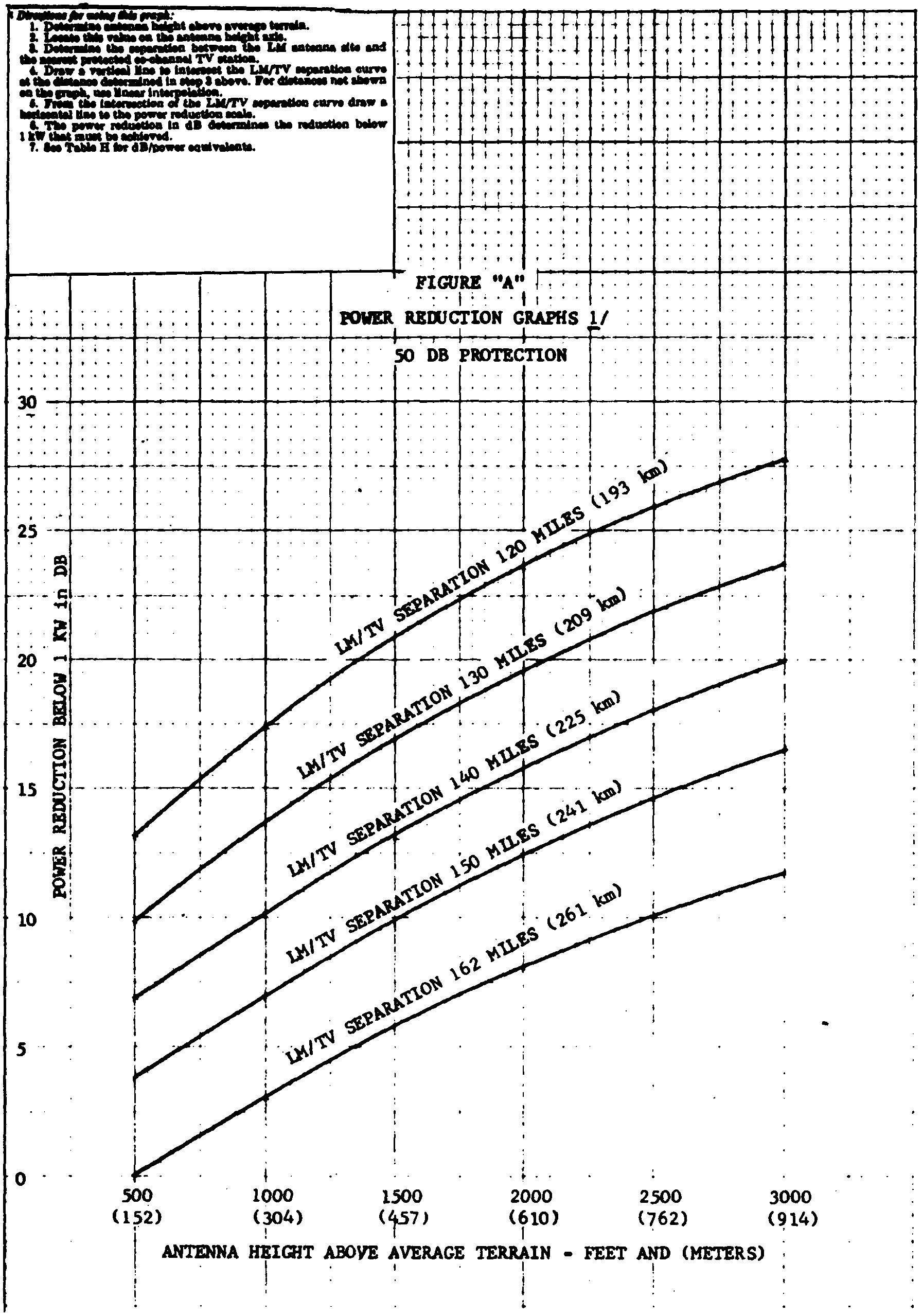
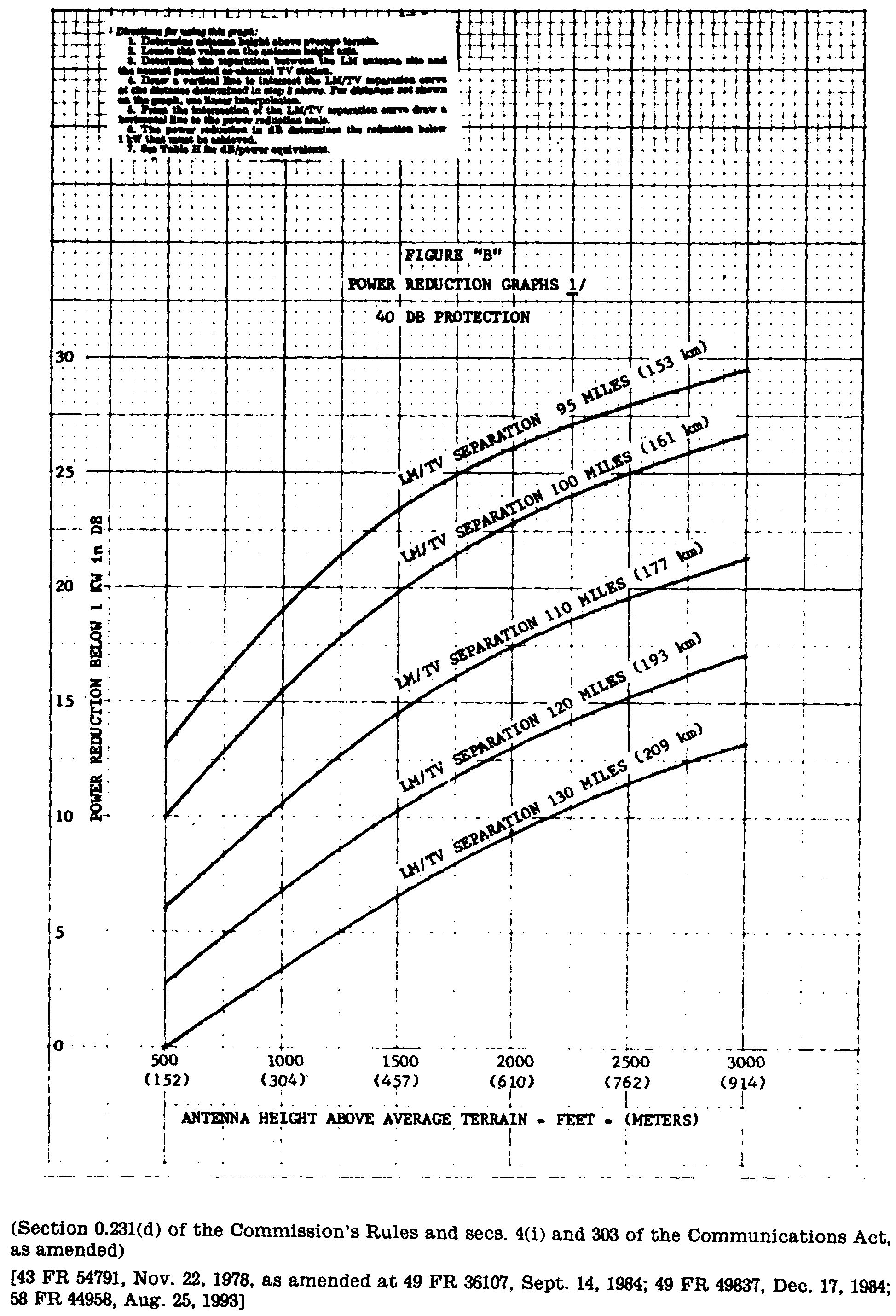
(b) Directions for Using the Figures.
(1) Determine antenna height above average terrain. (According to § 90.309(a)(4).)
(2) Locate this value on the antenna height axis.
(3) Determine the separation between the LM antenna site and the nearest protected co-channel TV station. (According to § 73.611.)
(4) Draw a vertical line to intersect the LM/TV separation curve at the distance determined in step 3 above. For distances not shown in the graph use linear interpolation.
(5) From the intersection of the LM/TV separation curve draw a horizontal line to the power reduction scale.
(6) The power reduction in dB determines the reduction below 1 kW that must be achieved.
(7) See Table F for dB/power equivalents.
Cite this article: FindLaw.com - Code of Federal Regulations Title 47. Telecommunication § 47.90.309 Tables and figures - last updated January 02, 2025 | https://codes.findlaw.com/cfr/title-47-telecommunication/cfr-sect-47-90-309/
FindLaw Codes may not reflect the most recent version of the law in your jurisdiction. Please verify the status of the code you are researching with the state legislature before relying on it for your legal needs.
Get help with your legal needs
FindLaw’s Learn About the Law features thousands of informational articles to help you understand your options. And if you’re ready to hire an attorney, find one in your area who can help.
