
Learn About The Law
Get help with your legal needs
FindLaw’s Learn About the Law features thousands of informational articles to help you understand your options. And if you’re ready to hire an attorney, find one in your area who can help.
Current as of January 02, 2025 | Updated by Findlaw Staff
(a) The volume for each chart integrated must be determined as follows:
V = IMV x IV
Where:
V = reported volume, Mcf
IMV = integral multiplier value, as calculated under this section
IV = the integral value determined by the integration process (also known as the “extension,” “integrated extension,” and “integrator count”)
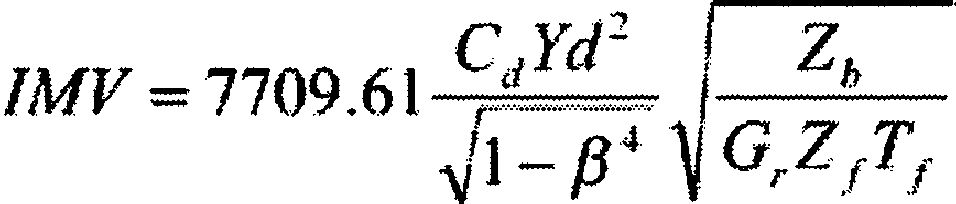
(1) If the primary device is a flange-tapped orifice plate, a single IMV must be calculated for each chart or chart interval using the following equation:
Where:
Cd = discharge coefficient or flow coefficient, calculated under API 14.3.3 or AGA Report No. 3 (1985), Section 5 (incorporated by reference, see § 3175.30)
β = Beta ratio
Y = gas expansion factor, calculated under API 14.3.3, Subsection 5.6 or AGA Report No. 3 (1985), Section 5 (incorporated by reference, see § 3175.30)
d = orifice diameter, in inches
Zb = supercompressibility at base pressure and temperature
Gr = relative density (specific gravity)
Zf = supercompressibility at flowing pressure and temperature
Tf = average flowing temperature, in degrees Rankine
(2) For other types of primary devices, the IMV must be calculated using the equations and procedures recommended by the PMT and approved by the BLM, specific to the make, model, size, and area ratio of the primary device being used.
(3) Variables that are functions of differential pressure, static pressure, or flowing temperature (e.g., Cd, Y, Zf) must use the average values of differential pressure, static pressure, and flowing temperature as determined from the integration statement and reported on the integration statement for the chart or chart interval integrated. The flowing temperature must be the average flowing temperature reported on the integration statement for the chart or chart interval being integrated.
(b) Atmospheric pressure used to convert static pressure in psig to static pressure in psia must be determined under appendix A to this subpart.
Cite this article: FindLaw.com - Code of Federal Regulations Title 43. Public Lands: Interior § 43.3175.94 Volume determination - last updated January 02, 2025 | https://codes.findlaw.com/cfr/title-43-public-lands-interior/cfr-sect-43-3175-94/
FindLaw Codes may not reflect the most recent version of the law in your jurisdiction. Please verify the status of the code you are researching with the state legislature before relying on it for your legal needs.
Get help with your legal needs
FindLaw’s Learn About the Law features thousands of informational articles to help you understand your options. And if you’re ready to hire an attorney, find one in your area who can help.
