
Learn About The Law
Get help with your legal needs
FindLaw’s Learn About the Law features thousands of informational articles to help you understand your options. And if you’re ready to hire an attorney, find one in your area who can help.
Current as of January 02, 2025 | Updated by Findlaw Staff
You must calculate the average fuel economy for Government motor vehicles as follows:
(a) Because there are so many motor vehicle configurations, you must take an average of all light duty motor vehicles by category that your agency obtained and operated during the fiscal year.
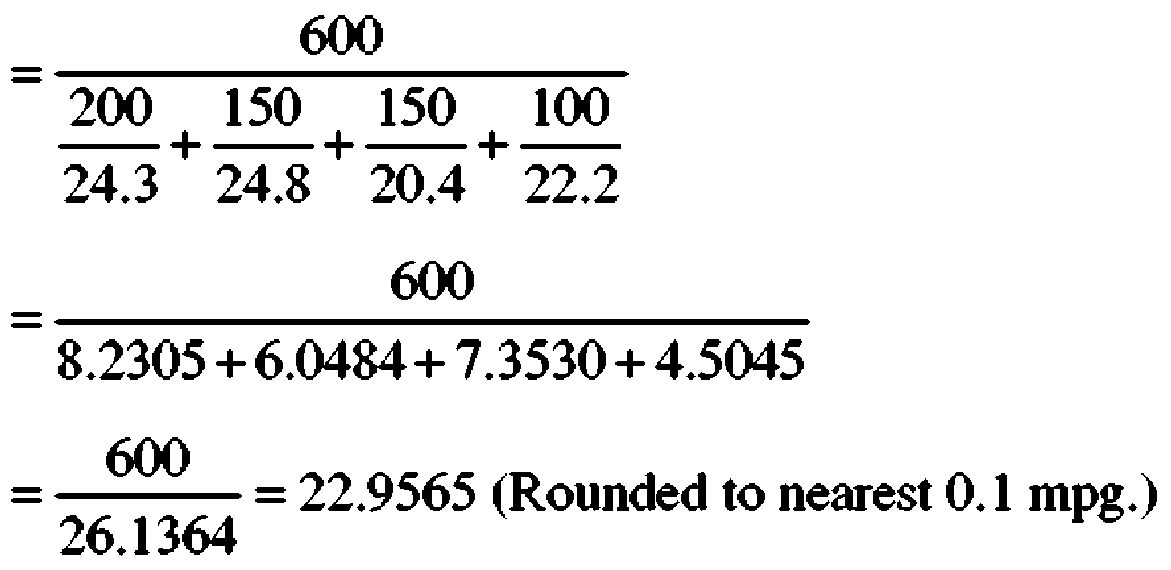
(b) This calculation is the sum of such light duty motor vehicles divided by the sum of the fractions representing the number of motor vehicles of each category by model divided by the unadjusted city/highway mile-per-gallon ratings for that model. The unadjusted city/highway mile-per-gallon ratings for each make and model are published by the Environmental Protection Agency (EPA) for each model year and published at http://www.fueleconomy.gov.
(c) An example follows:
Light trucks:
(i) 600 light trucks acquired in a specific year. These are broken down into:
(A) 200 Six cylinder automatic transmission pick-up trucks, EPA rating: 24.3 mpg, plus
(B) 150 Six cylinder automatic transmission mini-vans, EPA rating: 24.8 mpg, plus
(C) 150 Eight cylinder automatic transmission pick-up trucks, EPA rating: 20.4 mpg, plus
(D) 100 Eight cylinder automatic transmission cargo vans, EPA rating: 22.2 mpg.
(ii) Fleet average fuel economy for light trucks in this case is 23.0 mpg.
Cite this article: FindLaw.com - Code of Federal Regulations Title 41. Public Contracts and Property Management § 41.102–34.60 How do we calculate the average fuel economy for Government motor vehicles? - last updated January 02, 2025 | https://codes.findlaw.com/cfr/title-41-public-contracts-and-property-management/cfr-sect-41-102-34-60/
FindLaw Codes may not reflect the most recent version of the law in your jurisdiction. Please verify the status of the code you are researching with the state legislature before relying on it for your legal needs.
Get help with your legal needs
FindLaw’s Learn About the Law features thousands of informational articles to help you understand your options. And if you’re ready to hire an attorney, find one in your area who can help.
