
Learn About The Law
Get help with your legal needs
FindLaw’s Learn About the Law features thousands of informational articles to help you understand your options. And if you’re ready to hire an attorney, find one in your area who can help.
Current as of January 02, 2025 | Updated by Findlaw Staff
(a) Derive the final weighted brake-specific mass emission rates (g/kW-hr) through the steps described in this section.
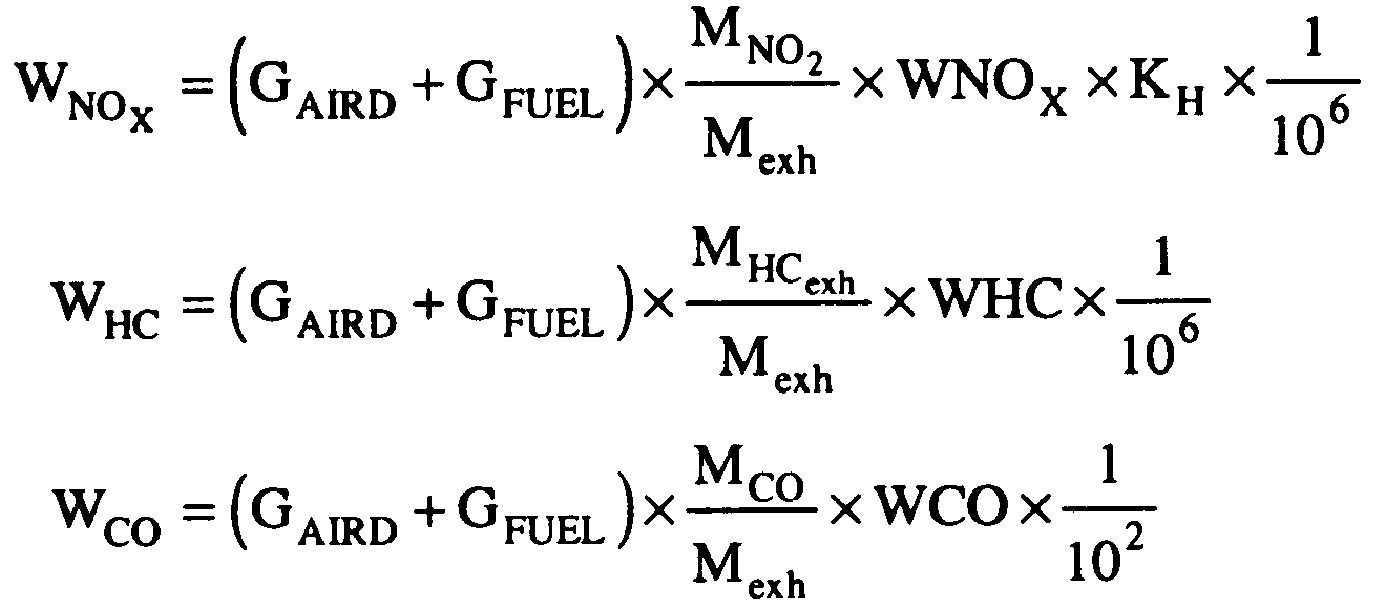
(b) Air and fuel flow method. If both air and fuel flow mass rates are measured, use the following equations to determine the weighted emission values for the test engine:
Where:
WHC=Mass rate of HC in exhaust [g/hr],
GAIRD=Intake air mass flow rate on dry basis [g/hr],
GFUEL=Fuel mass flow rate [g/hr],
MHCexh=Molecular weight of hydrocarbons in the exhaust, see the following equation:
MHCexh=12.01+α1.008+β16.00
Where:
α=Hydrogen/carbon atomic ratio of the fuel
β=Oxygen/carbon atomic ratio of the fuel
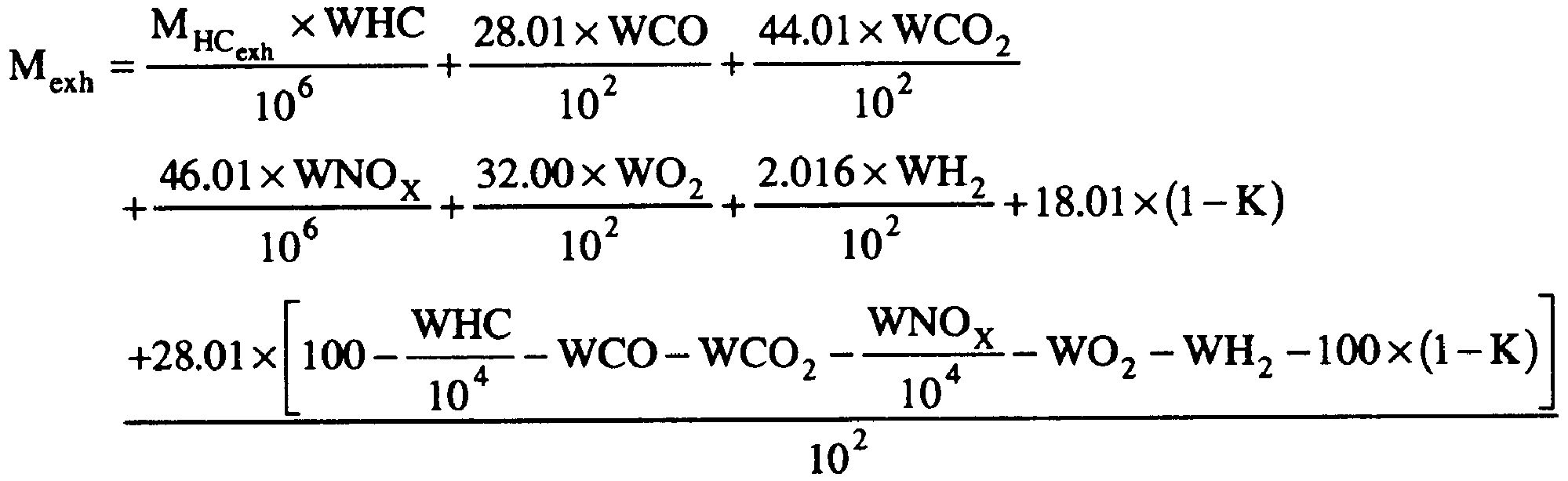
Mexh=Molecular weight of the total exhaust, see the following equation:
Where:
WHC=HC volume concentration in exhaust, ppmC wet
WCO=CO percent concentration in the exhaust, wet
DCO=CO percent concentration in the exhaust, dry
WCO2=CO2 percent concentration in the exhaust, wet
DCO2=CO2 percent concentration in the exhaust, dry
WNOX=NO volume concentration in exhaust, ppm wet
WO2=O2 percent concentration in the exhaust, wet
WH2=H2 percent concentration in exhaust, wet
K=correction factor to be used when converting dry measurements to a wet basis. Therefore, wet concentration=dry concentration x K,
where K is:
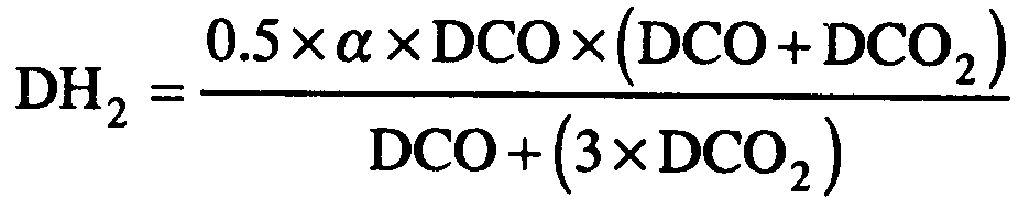
DH2=H2 percent concentration in exhaust, dry, calculated from the following equation:
Wco=Mass rate of CO in exhaust, [g/hr]
Mco=Molecular weight of CO=28.01
WNOx=Mass rate of NOX in exhaust, [g/hr]
MNO2=Molecular weight of NO2=46.01
KH = Factor for correcting the effects of humidity on NO2 formation for 4–stroke gasoline small engines, as follows:
KH = (9.953 x H + 0.832)
Where:
H = the amount of water in an ideal gas; 40 CFR 1065.645 describes how to determine this value (referred to as xH2O).
KH = 1 for two-stroke gasoline engines.
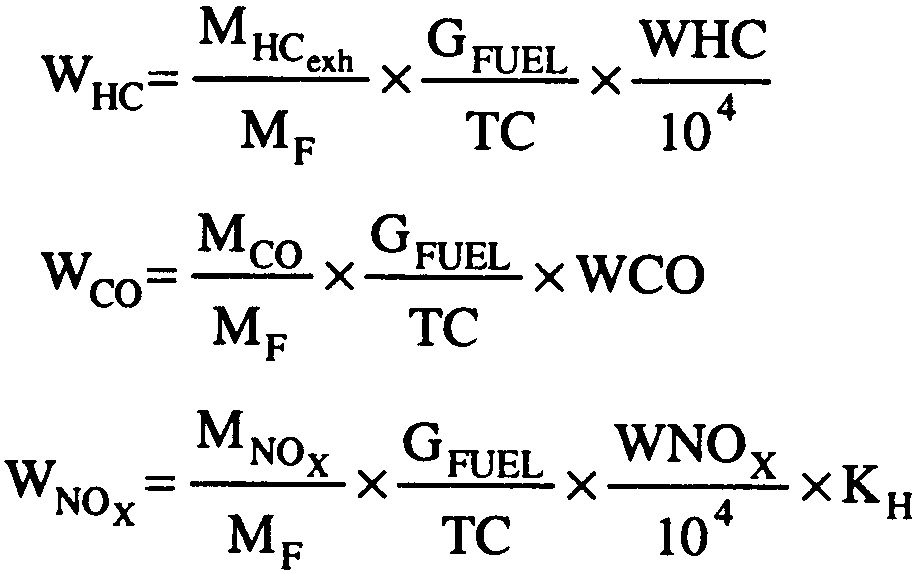
(c) Fuel flow method. The following equations are to be used when fuel flow is selected as the basis for mass emission calculations using the raw gas method.
Where:
WHC=Mass rate of HC in exhaust, [g/hr]
MHC exh=Molecular weight of hydrocarbons in the exhaust, see following equation:
MHCexh=MC+αMH+βMO
MC=Molecular weight of carbon=12.01 [g/mole]
MH=Molecular weight of hydrogen=1.008 [g/mole]
MO=Molecular weight of oxygen=16.00 [g/mole]
α=Hydrogen to carbon ratio of the test fuel
β=Oxygen to carbon ratio of the test fuel
MF=Molecular weight of test fuel
GFUEL=Fuel mass flow rate, [g/hr]
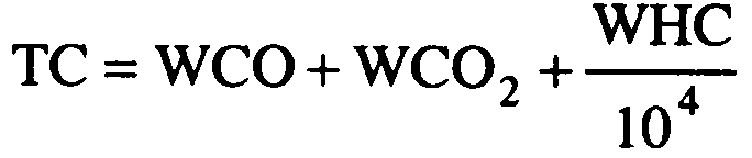
TC=Total carbon in exhaust, see following equation:
WCO=CO percent concentration in the exhaust, wet
WCO2=CO2 percent concentration in the exhaust, wet
DCO=CO percent concentration in the exhaust, dry
DCO2=CO2 percent concentration in the exhaust, dry
WHC=HC volume concentration in exhaust, ppmC wet
WNOX=NOX volume concentration in exhaust, ppm wet
K=correction factor to be used when converting dry measurements to a wet basis. Therefore, wet concentration=dry concentration x K, where K is:
DH2=H2 percent concentration in exhaust, dry, calculated from the following equation:
WCO=Mass rate of CO in exhaust, [g/hr]
MCO=Molecular weight of CO=28.01
WNOX=Mass rate of NOX in exhaust, [g/hr]
MNO2=Molecular weight of NO2=46.01
KH = Factor for correcting the effects of humidity on NO2 formation for 4–stroke gasoline small engines, as follows:
KH = (9.953 x H + 0.832)
Where:
H = the amount of water in an ideal gas; 40 CFR 1065.645 describes how to determine this value (referred to as xH2O).
KH = 1 for two-stroke gasoline engines.
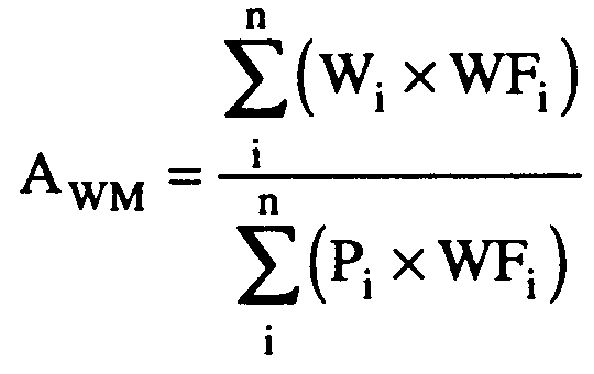
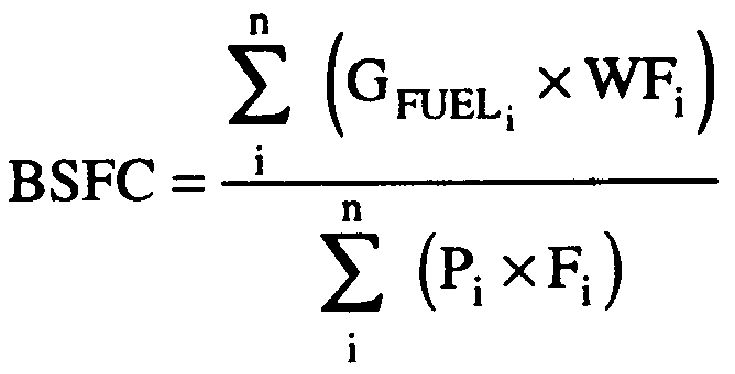
(d) Calculate the final weighted brake-specific emission rate for each individual gas component using the following equation:
Where:
AWM=Final weighted brake-specific mass emission rate (HC, CO, NOX) [g/kW-hr]
Wi=Mass emission rate during mode i [g/hr]
WFi=Weighting factors for each mode according to § 90.410(a)
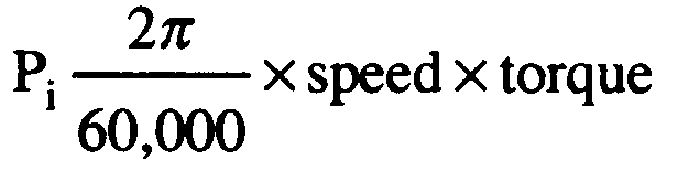
Pi=Gross average power generated during mode i [kW], calculated from the following equation,
Where:
speed=average engine speed measured during mode i [rev./minute]
torque=average engine torque measured during mode i [N-m]



Cite this article: FindLaw.com - Code of Federal Regulations Title 40. Protection of Environment § 40.90.419 Raw emission sampling calculations—gasoline fueled engines - last updated January 02, 2025 | https://codes.findlaw.com/cfr/title-40-protection-of-environment/cfr-sect-40-90-419/
FindLaw Codes may not reflect the most recent version of the law in your jurisdiction. Please verify the status of the code you are researching with the state legislature before relying on it for your legal needs.
Make It a Preferred Google Search Source
Get help with your legal needs
FindLaw’s Learn About the Law features thousands of informational articles to help you understand your options. And if you’re ready to hire an attorney, find one in your area who can help.
