
Learn About The Law
Get help with your legal needs
FindLaw’s Learn About the Law features thousands of informational articles to help you understand your options. And if you’re ready to hire an attorney, find one in your area who can help.
Current as of January 02, 2025 | Updated by Findlaw Staff
(a) For each averaging period per paragraph (b) of this section in which a refinery plans to generate early credits, its average gasoline benzene concentration calculated according to § 80.1238(a) must be at least 10% lower than its benzene baseline concentration approved under § 80.1280.
(b) The early credit averaging periods are as follows:
(1) For 2007, the seven-month period from June 1, 2007 through December 31, 2007.
(2) For 2008, 2009 and 2010, the 12–month calendar year.
(3) For small refiners approved under § 80.1340, the 12–month calendar years 2011, 2012, 2013, and 2014 in addition to the periods specified in paragraphs (b)(1) and (b)(2) of this section.
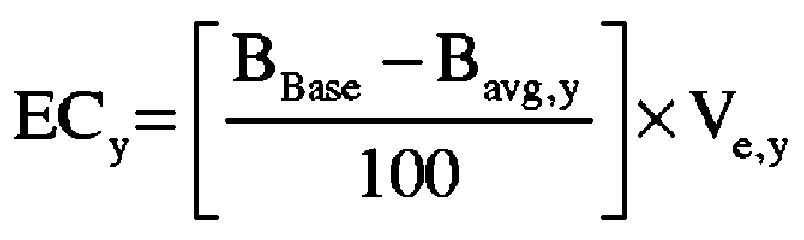
(c) The number of early benzene credits generated shall be calculated for each applicable averaging period as follows:
Where:
ECy = Early credits generated in averaging period y (gallons benzene).
BBase = Baseline benzene concentration of the refinery (volume percent benzene), per § 80.1280(a).
Bavg,y = Average benzene concentration of gasoline produced at the refinery during averaging period y (volume percent benzene), per § 80.1238.
Ve,y = Total volume of gasoline produced at the refinery during averaging period y (gallons).
(d) A refinery that plans to generate early credits must also show that it has met all of the following requirements prior to or during the first early credit averaging period, per paragraph (b) of this section, in which it generates early credits:
(1) Since 2005, has made operational changes and/or improvements in benzene control technology to reduce gasoline benzene levels, including at least one of the following:
(i) Treating the heavy straight run naphtha entering the reformer using light naphtha splitting and/or isomerization.
(ii) Treating the reformate stream exiting the reformer using benzene extraction or benzene saturation.
(iii) Directing additional refinery streams to the reformer for treatment described paragraphs (d)(1)(i) and (ii) of this section.
(iv) Directing reformate streams to other refineries with treatment capabilities described in paragraph (d)(1)(ii) of this section.
(v) Providing for benzene alkylation.
(2)(i) A refiner may petition EPA to approve, for purposes of paragraph (d)(1) of this section, the use of operational changes and/or improvements in benzene control technology that are not listed in paragraph (d)(1) of this section to reduce gasoline benzene levels at a refinery.
(ii) The petition specified in paragraph (d)(2)(i) of this section must be sent to: U.S. EPA, NVFEL–ASD, Attn: MSAT2 Early Credit Benzene Reduction Technology, 2000 Traverwood Dr., Ann Arbor, MI 48105.
(iii) The petition specified in paragraph (d)(2)(i) of this section must show how the benzene control technology improvement or operational change results in a net reduction in the refinery's average gasoline benzene level, exclusive of benzene reductions due simply to blending practices.
(iv) The petition specified in paragraph (d)(2)(i) of this section must be submitted to EPA prior to the start of the first averaging period in which the refinery plans to generate early credits.
(v) The refiner must provide additional information as requested by EPA.
(e) Early benzene credits calculated in accordance with paragraph (c) of this section shall be expressed to the nearest gallon. Fractional values shall be rounded down if less than 0.50, and rounded up if greater than or equal to 0.50.
Cite this article: FindLaw.com - Code of Federal Regulations Title 40. Protection of Environment § 40.80.1275 How are early benzene credits generated? - last updated January 02, 2025 | https://codes.findlaw.com/cfr/title-40-protection-of-environment/cfr-sect-40-80-1275/
FindLaw Codes may not reflect the most recent version of the law in your jurisdiction. Please verify the status of the code you are researching with the state legislature before relying on it for your legal needs.
Make It a Preferred Google Search Source
Get help with your legal needs
FindLaw’s Learn About the Law features thousands of informational articles to help you understand your options. And if you’re ready to hire an attorney, find one in your area who can help.
