
Learn About The Law
Get help with your legal needs
FindLaw’s Learn About the Law features thousands of informational articles to help you understand your options. And if you’re ready to hire an attorney, find one in your area who can help.
Current as of January 02, 2025 | Updated by Findlaw Staff
(a) Federal agencies should:
(1) Plan for emergencies and develop procedures for addressing oil discharges and releases of hazardous substances, pollutants, or contaminants;
(2) Coordinate their planning, preparedness, and response activities with one another;
(3) Coordinate their planning, preparedness, and response activities with affected states, local governments, and private entities; and
(4) Make available those facilities or resources that may be useful in a response situation, consistent with agency authorities and capabilities.
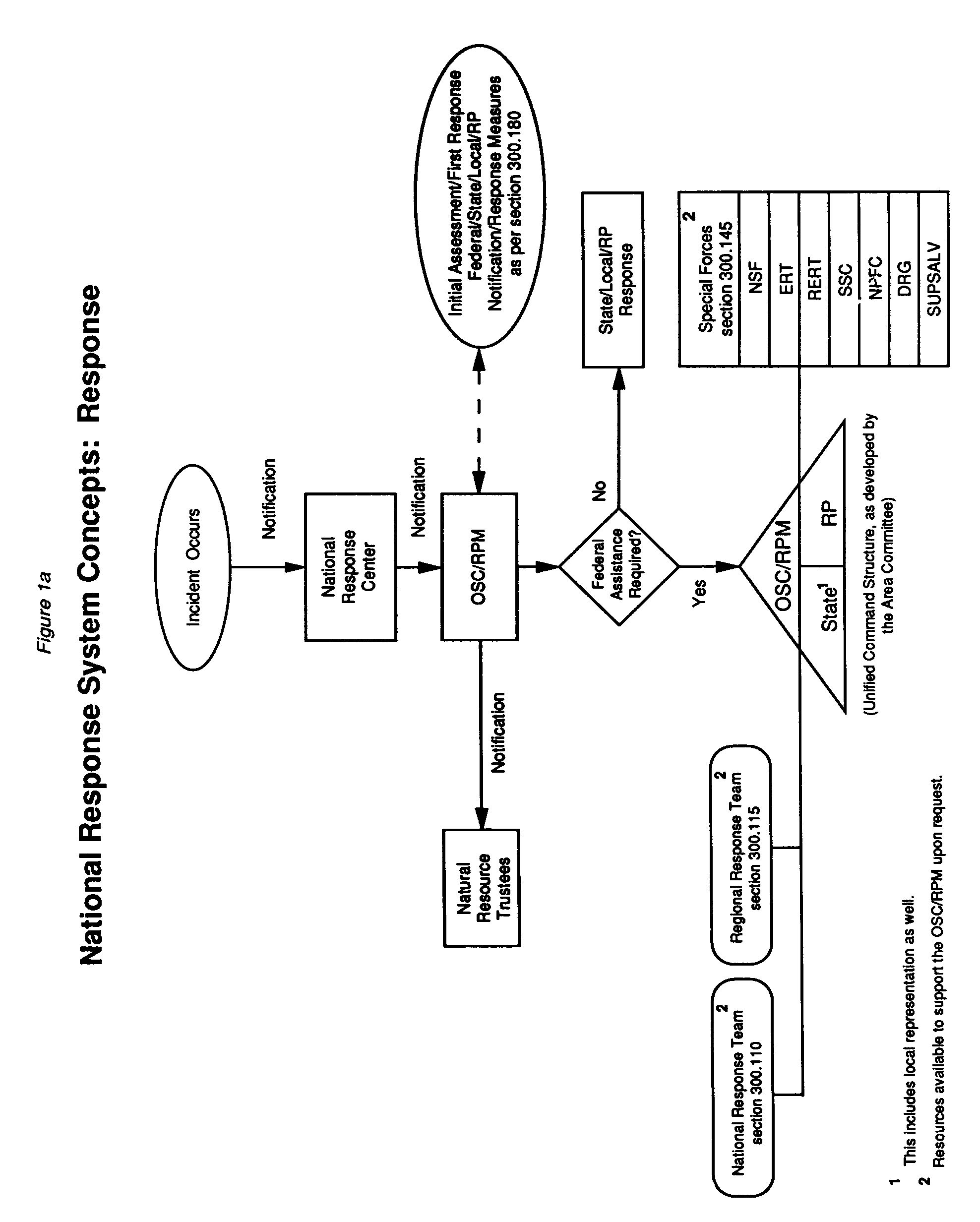
(b) Three fundamental kinds of activities are performed pursuant to the NCP:
(1) Preparedness planning and coordination for response to a discharge of oil or release of a hazardous substance, pollutant, or contaminant;
(2) Notification and communications; and
(3) Response operations at the scene of a discharge or release.
(c) The organizational elements created to perform these activities are:
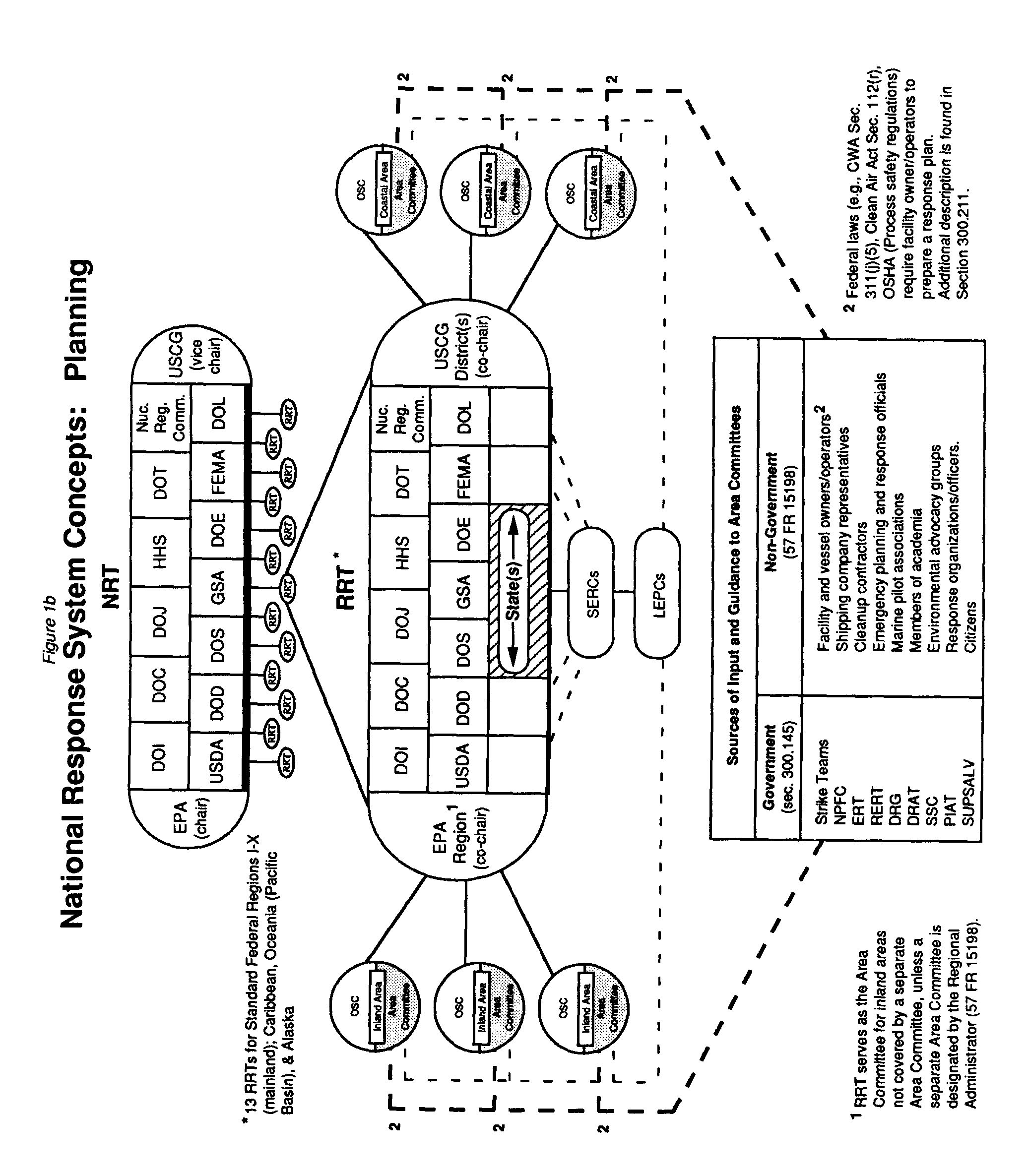
(1) The NRT, responsible for national response and preparedness planning, for coordinating regional planning, and for providing policy guidance and support to the Regional Response Teams (RRTs). NRT membership consists of representatives from the agencies specified in § 300.175(b).
(2) RRTs, responsible for regional planning and preparedness activities before response actions, and for providing advice and support to the OSC or RPM when activated during a response. RRT membership consists of designated representatives from each federal agency participating in the NRT together with state and (as agreed upon by the states) local government representatives.
(3) The OSC and the RPM, primarily responsible for directing response efforts and coordinating all other efforts at the scene of a discharge or release. The other responsibilities of OSCs and RPMs are described in § 300.135.
(4) Area Committees, responsible for developing, under direction of the OSC, ACPs for each area designated by the President. Responsibilities of Area Committees are described in § 300.205(c).
(d) The basic framework for the response management structure is a system (e.g., a unified command system) that brings together the functions of the Federal Government, the state government, and the responsible party to achieve an effective and efficient response, where the OSC maintains authority.
(e)(1) The organizational concepts of the national response system are depicted in the following Figures 1a and 1b:
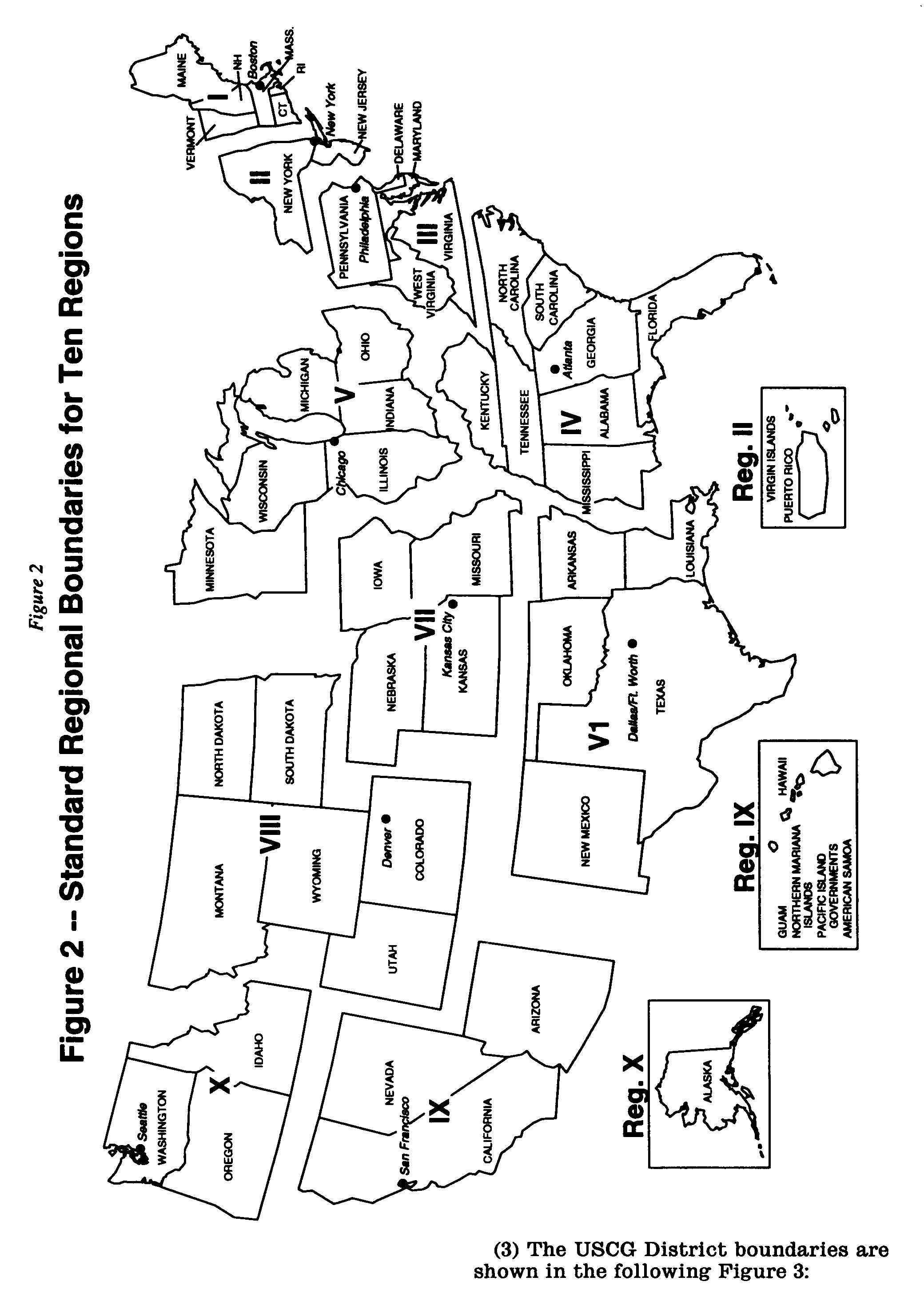
(2) The standard federal regional boundaries (which are also the geographic areas of responsibility for the RRTs) are shown in the following Figure 2:
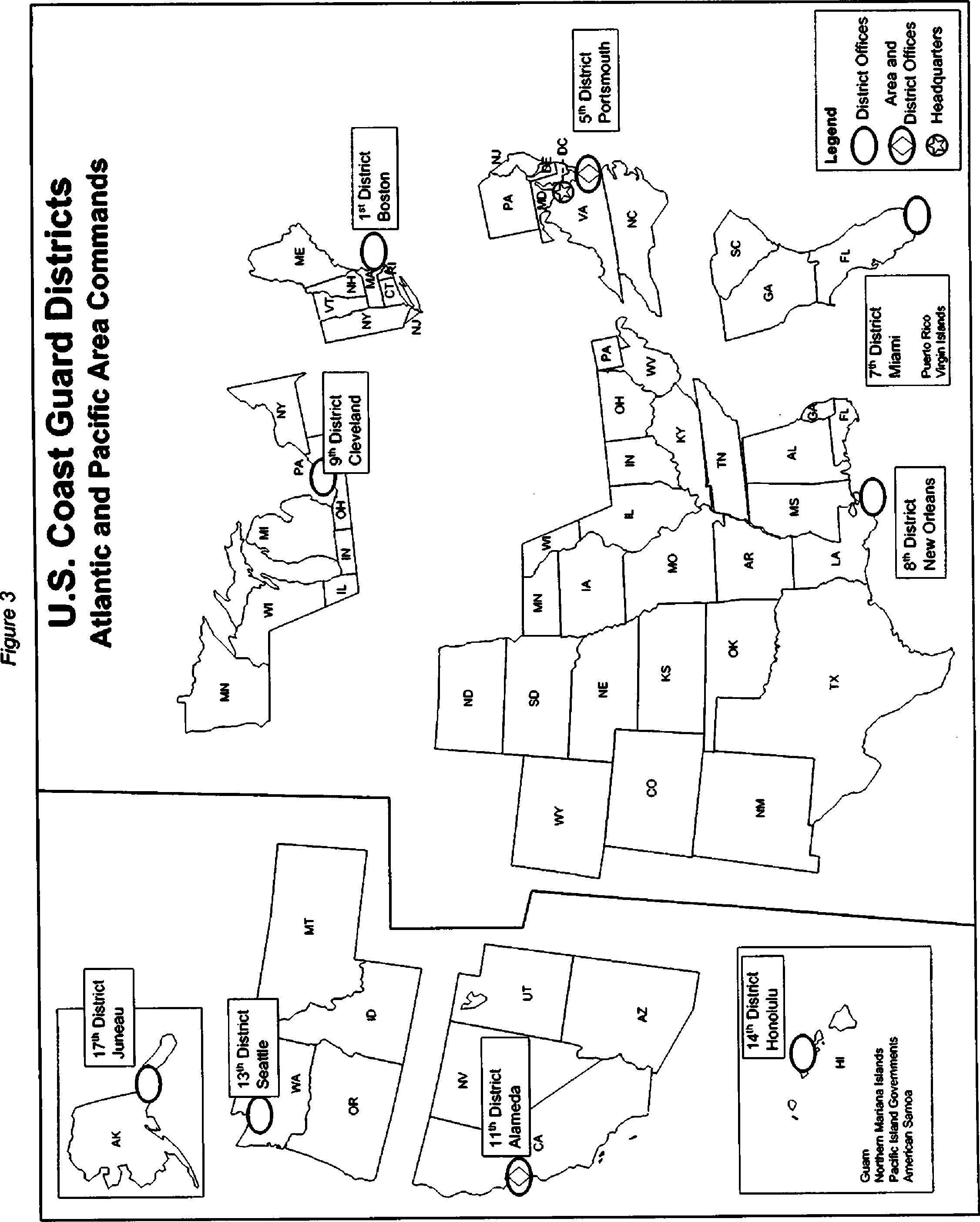
(3) The USCG District boundaries are shown in the following Figure 3:
Cite this article: FindLaw.com - Code of Federal Regulations Title 40. Protection of Environment § 40.300.105 General organization concepts - last updated January 02, 2025 | https://codes.findlaw.com/cfr/title-40-protection-of-environment/cfr-sect-40-300-105/
FindLaw Codes may not reflect the most recent version of the law in your jurisdiction. Please verify the status of the code you are researching with the state legislature before relying on it for your legal needs.
Get help with your legal needs
FindLaw’s Learn About the Law features thousands of informational articles to help you understand your options. And if you’re ready to hire an attorney, find one in your area who can help.
