
Learn About The Law
Get help with your legal needs
FindLaw’s Learn About the Law features thousands of informational articles to help you understand your options. And if you’re ready to hire an attorney, find one in your area who can help.
Current as of January 02, 2025 | Updated by Findlaw Staff
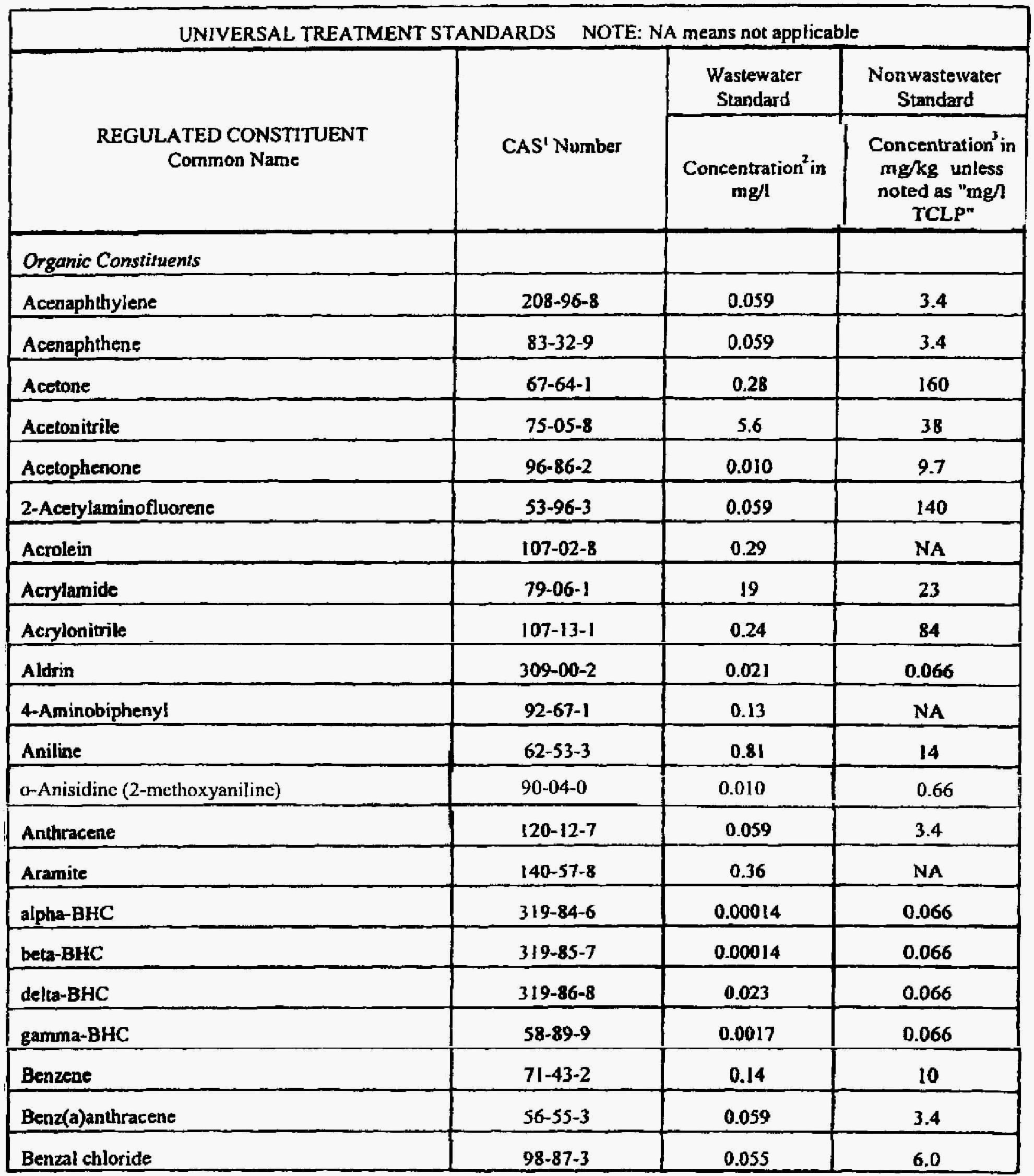
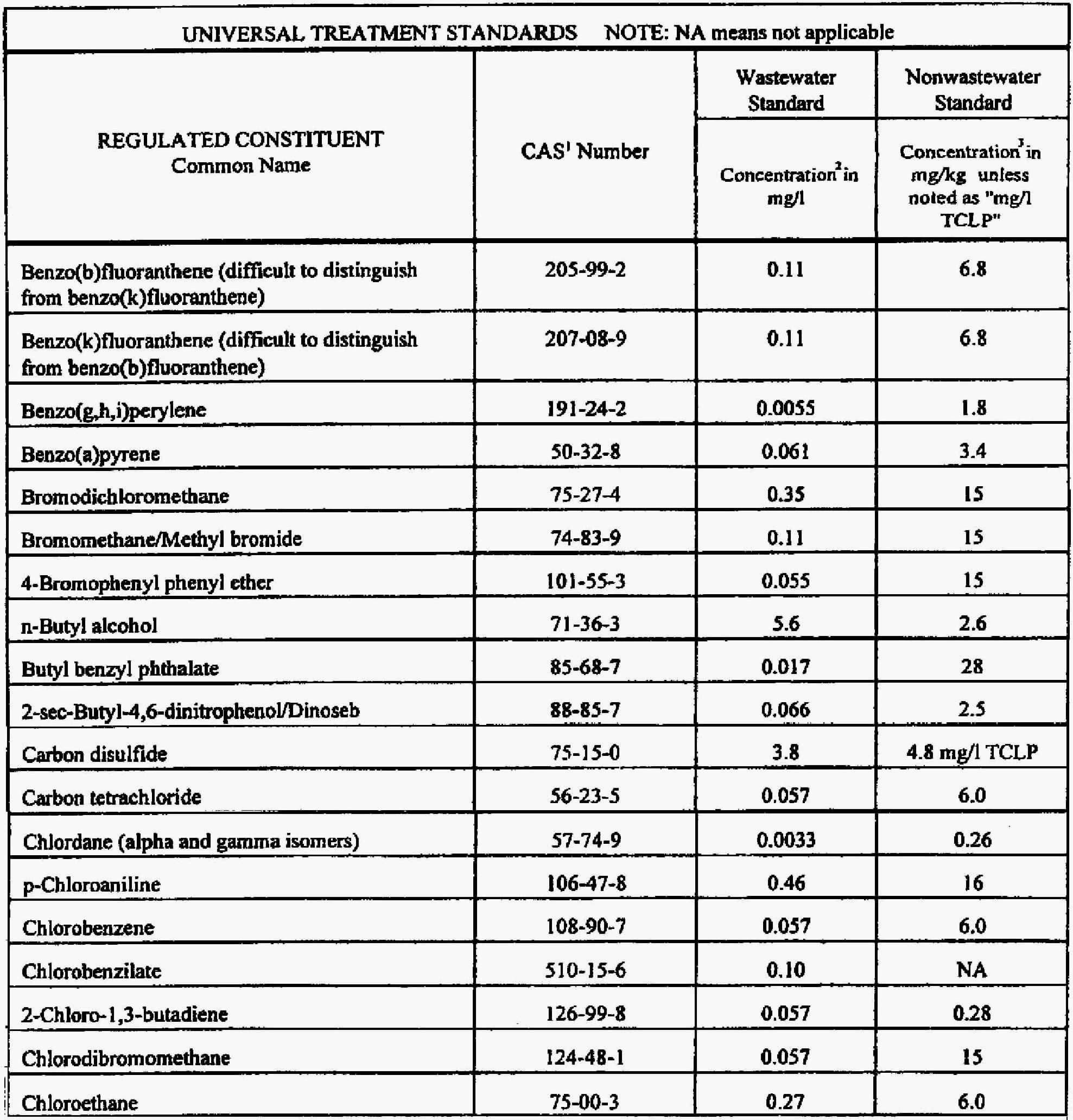
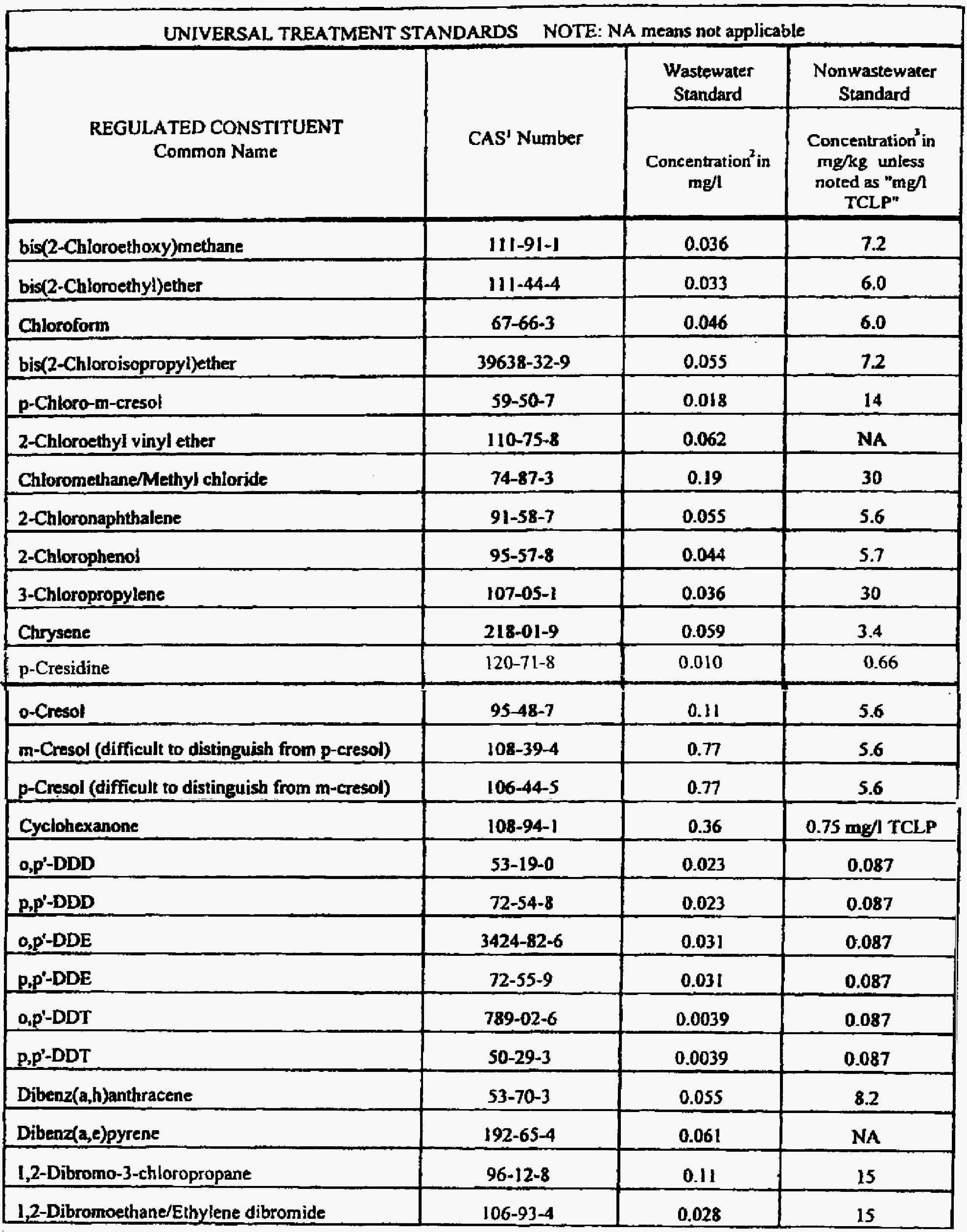
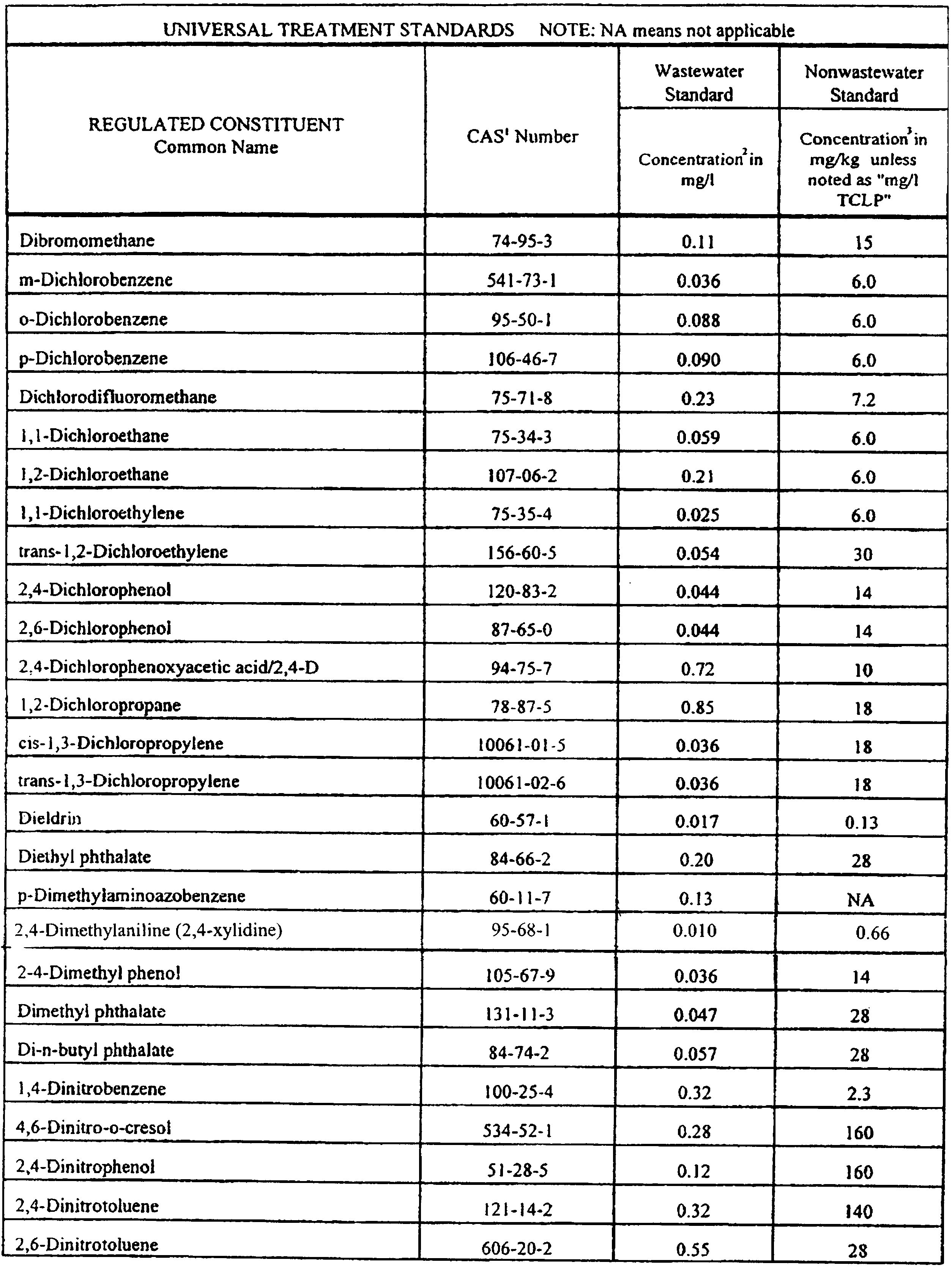
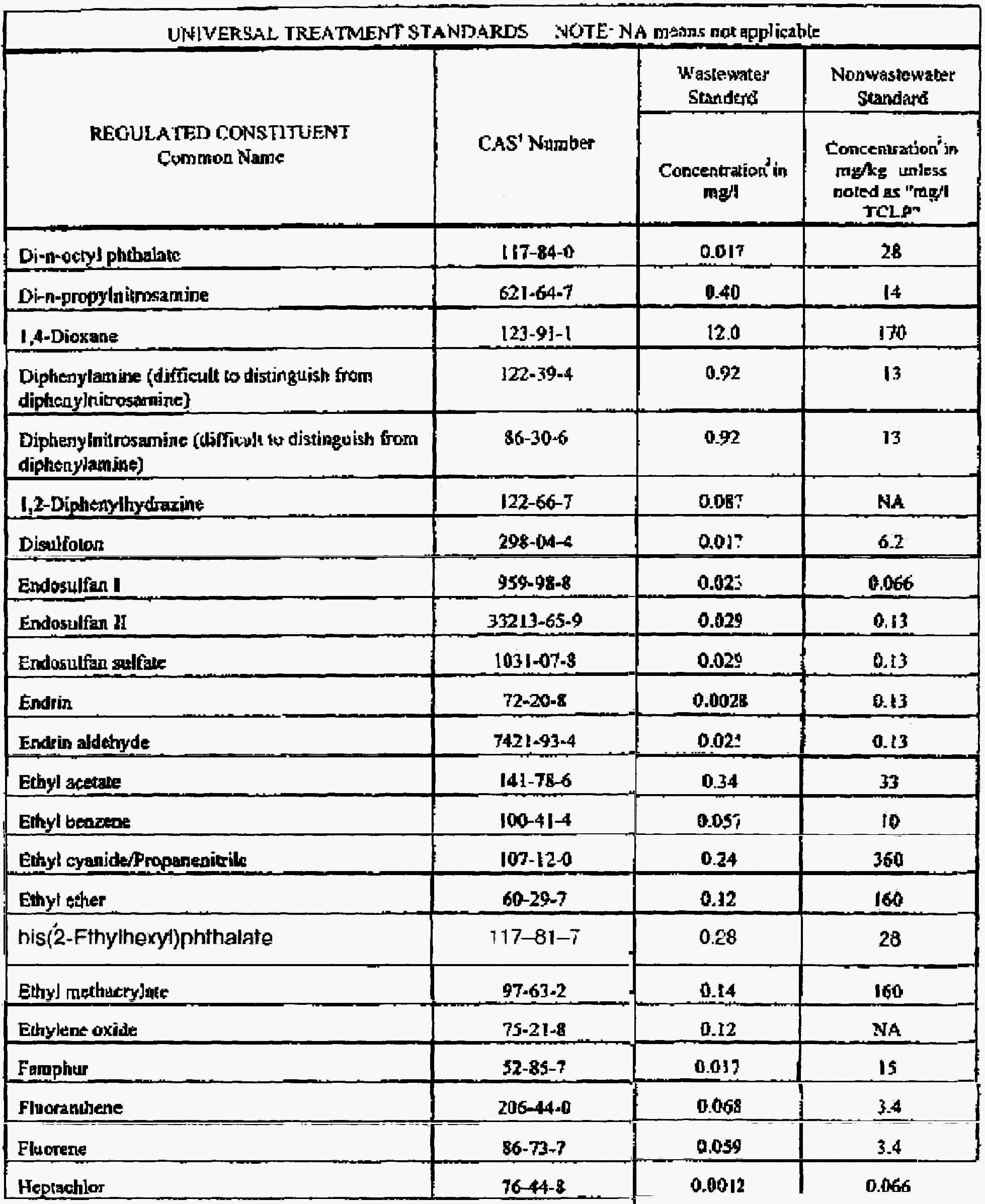
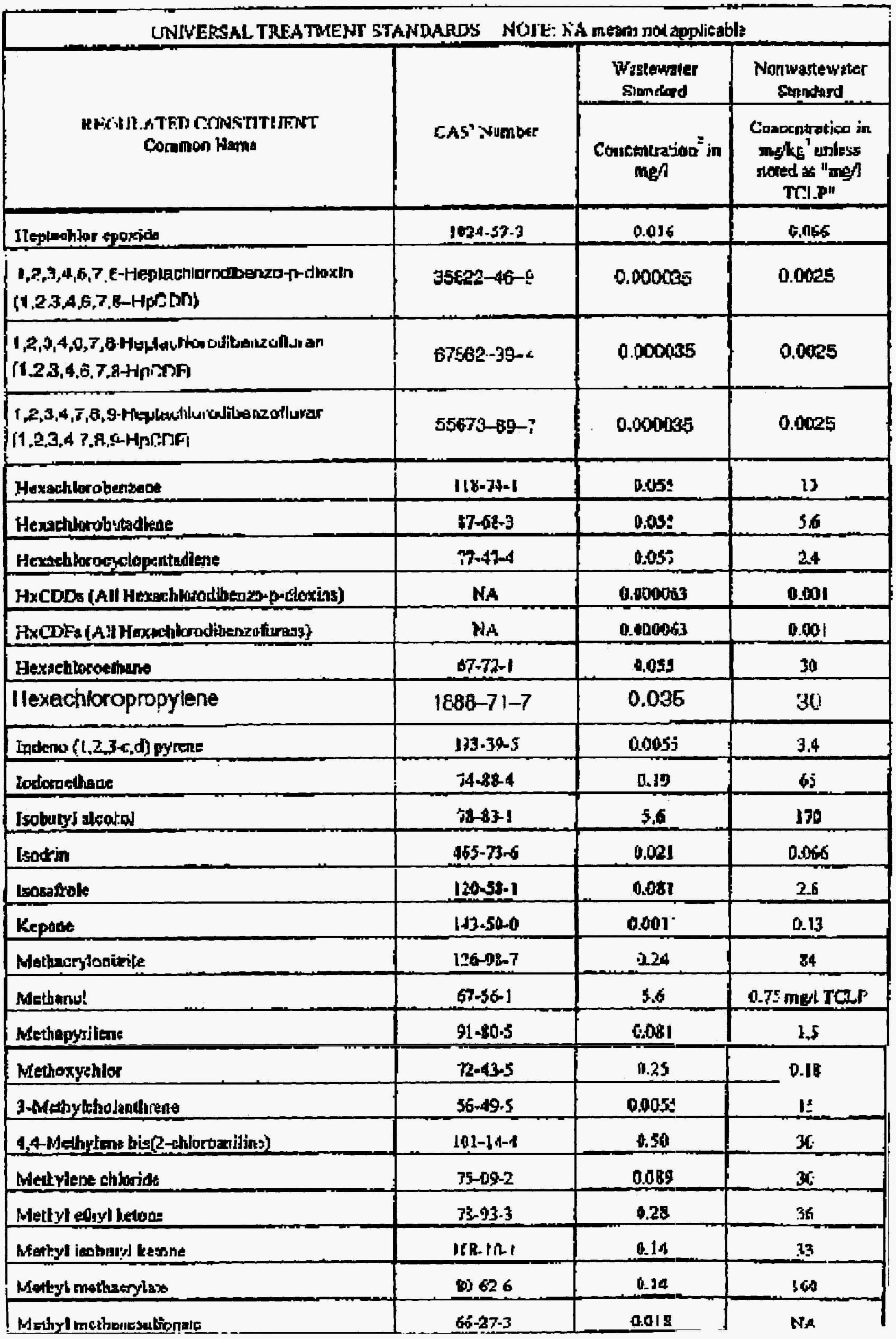
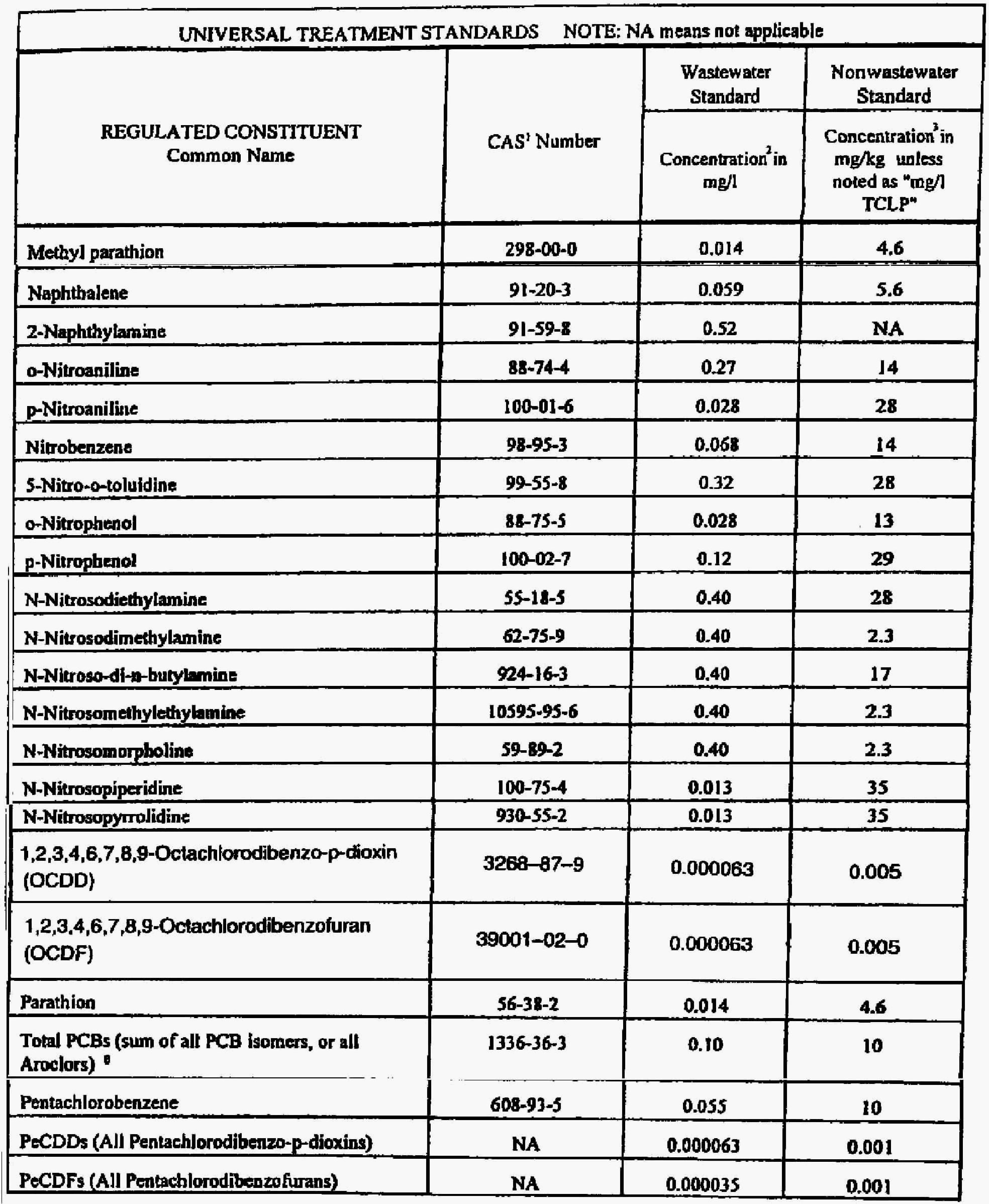
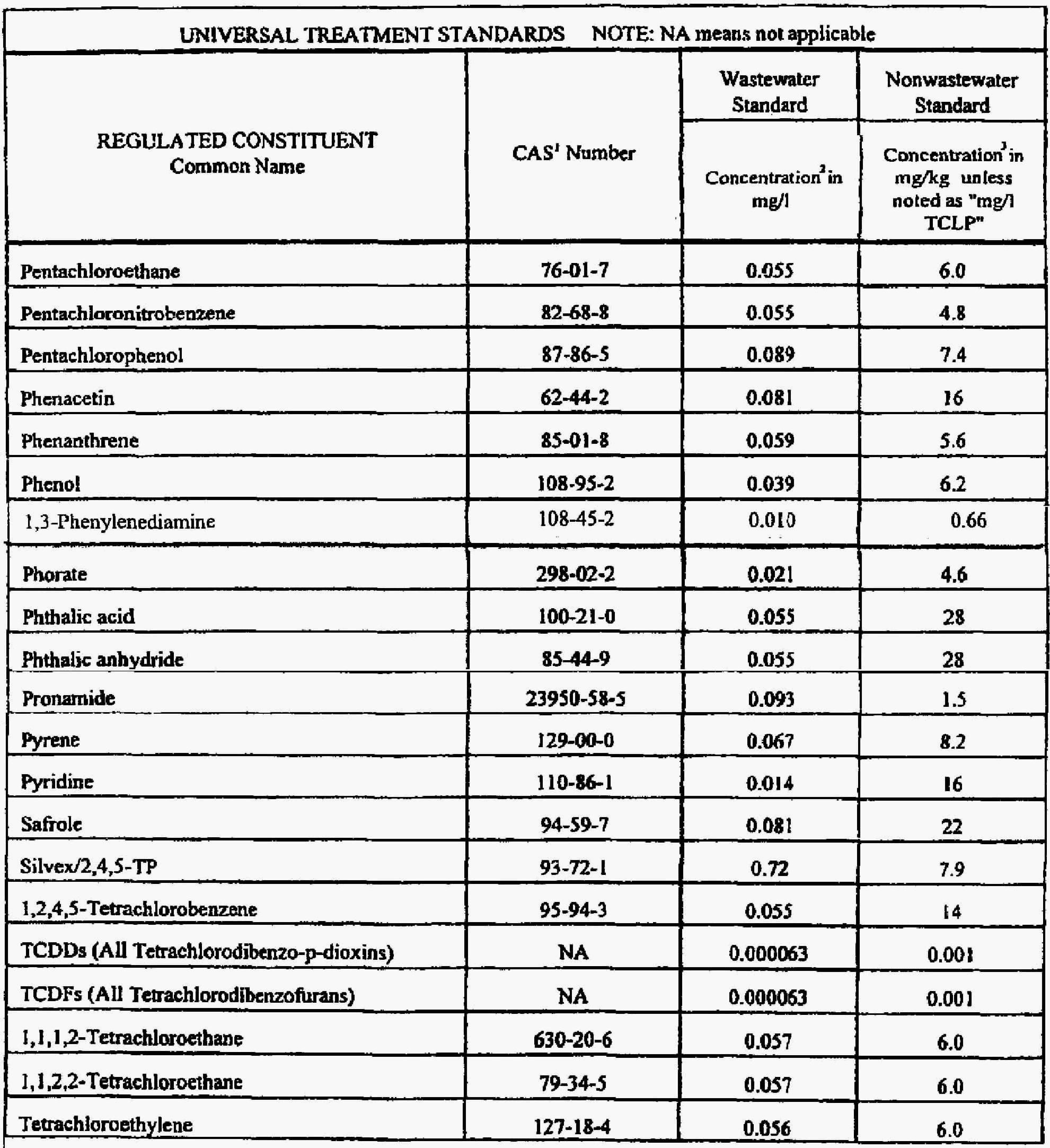
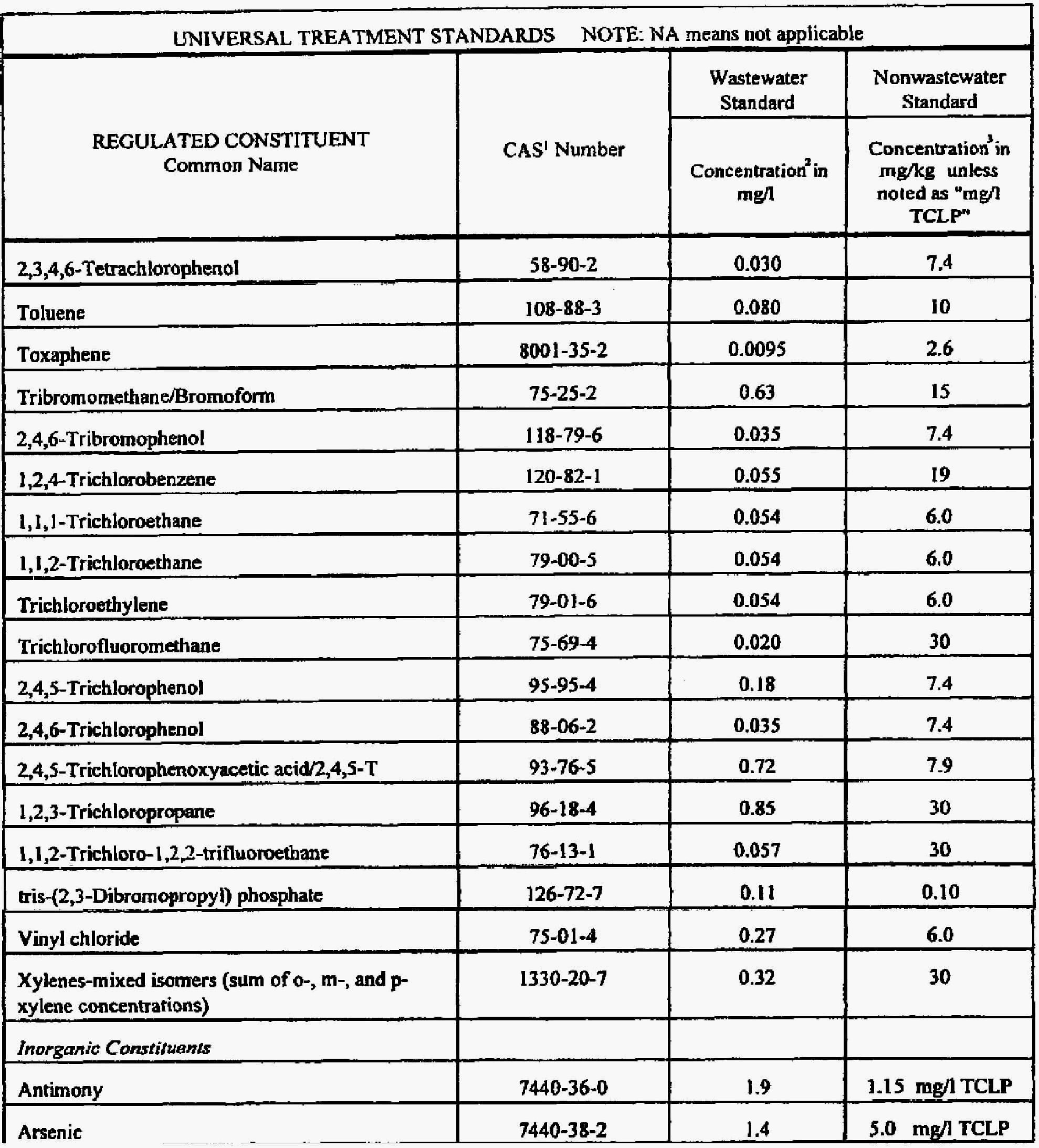
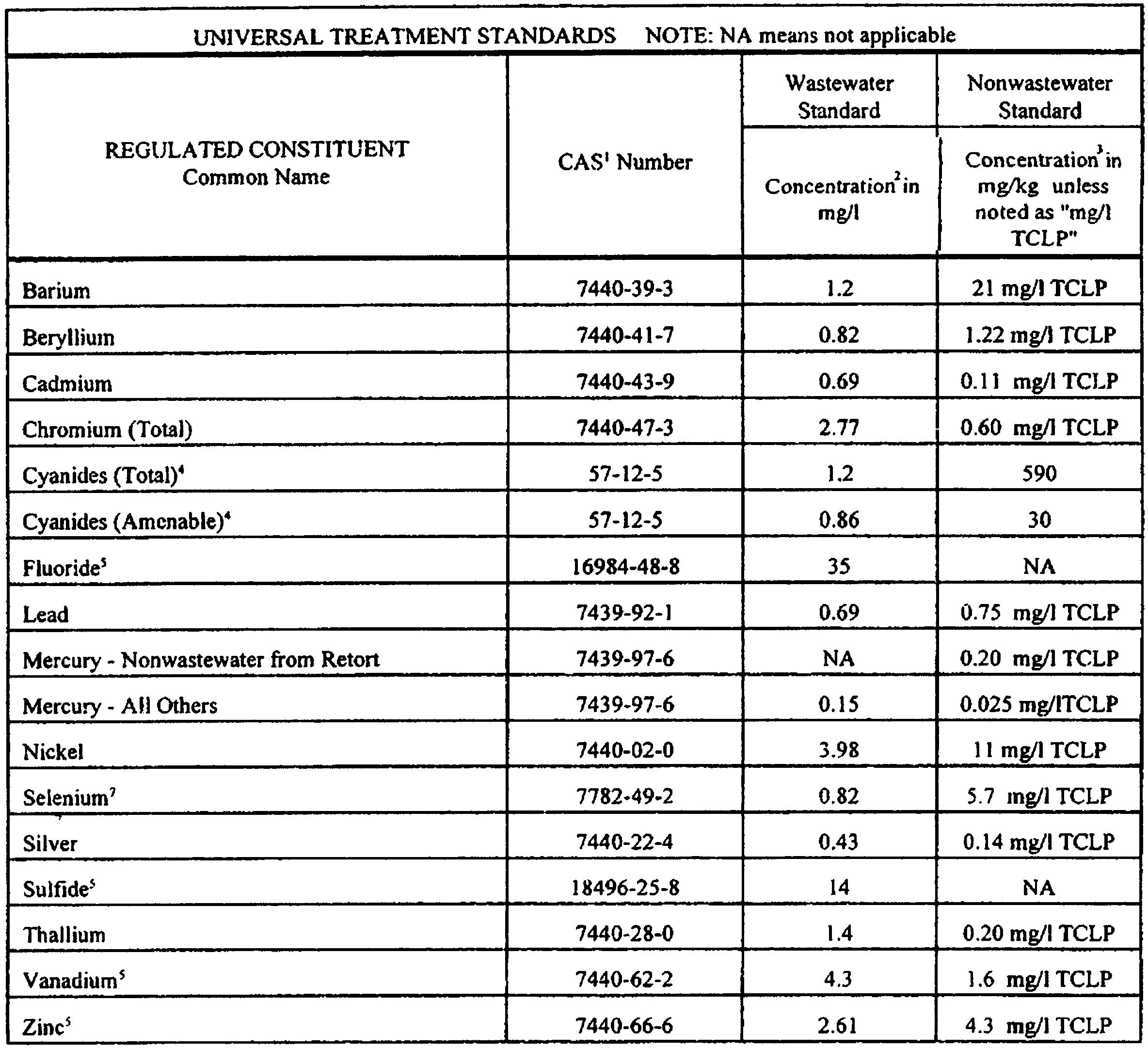
(a) Table UTS identifies the hazardous constituents, along with the nonwastewater and wastewater treatment standard levels, that are used to regulate most prohibited hazardous wastes with numerical limits. For determining compliance with treatment standards for underlying hazardous constituents as defined in § 268.2(i), these treatment standards may not be exceeded. Compliance with these treatment standards is measured by an analysis of grab samples, unless otherwise noted in the following Table UTS.
FOOTNOTES TO TABLE UTS
1 CAS means Chemical Abstract Services. When the waste code and/or regulated constituents are described as a combination of a chemical with it's salts and/or esters, the CAS number is given for the parent compound only.
2 Concentration standards for wastewaters are expressed in mg/l and are based on analysis of composite samples.
3 Except for Metals (EP or TCLP) and Cyanides (Total and Amenable) the nonwastewater treatment standards expressed as a concentration were established, in part, based upon incineration in units operated in accordance with the technical requirements of 40 CFR part 264, subpart O or 40 CFR part 265, subpart O, or based upon combustion in fuel substitution units operating in accordance with applicable technical requirements. A facility may comply with these treatment standards according to provisions in 40 CFR 268.40(d). All concentration standards for nonwastewaters are based on analysis of grab samples.
4 Both Cyanides (Total) and Cyanides (Amenable) for nonwastewaters are to be analyzed using Method 9010C or 9012B, found in “Test Methods for Evaluating Solid Waste, Physical/Chemical Methods,” EPA Publication SW–846, as incorporated by reference in 40 CFR 260.11, with a sample size of 10 grams and a distillation time of one hour and 15 minutes.
5 These constituents are not “underlying hazardous constituents” in characteristic wastes, according to the definition at § 268.2(i).
6 [Reserved]
7 This constituent is not an underlying hazardous constituent as defined at § 268.2(i) of this Part because its UTS level is greater than its TC level, thus a treatment selenium waste would always be characteristically hazardous, unless it is treated to below its characteristic level.
8 This standard is temporarily deferred for soil exhibiting a hazardous characteristic due to D004-D011 only.
(b) [Reserved]
Cite this article: FindLaw.com - Code of Federal Regulations Title 40. Protection of Environment § 40.268.48 Universal treatment standards - last updated January 02, 2025 | https://codes.findlaw.com/cfr/title-40-protection-of-environment/cfr-sect-40-268-48/
FindLaw Codes may not reflect the most recent version of the law in your jurisdiction. Please verify the status of the code you are researching with the state legislature before relying on it for your legal needs.
Make It a Preferred Google Search Source
Get help with your legal needs
FindLaw’s Learn About the Law features thousands of informational articles to help you understand your options. And if you’re ready to hire an attorney, find one in your area who can help.
